
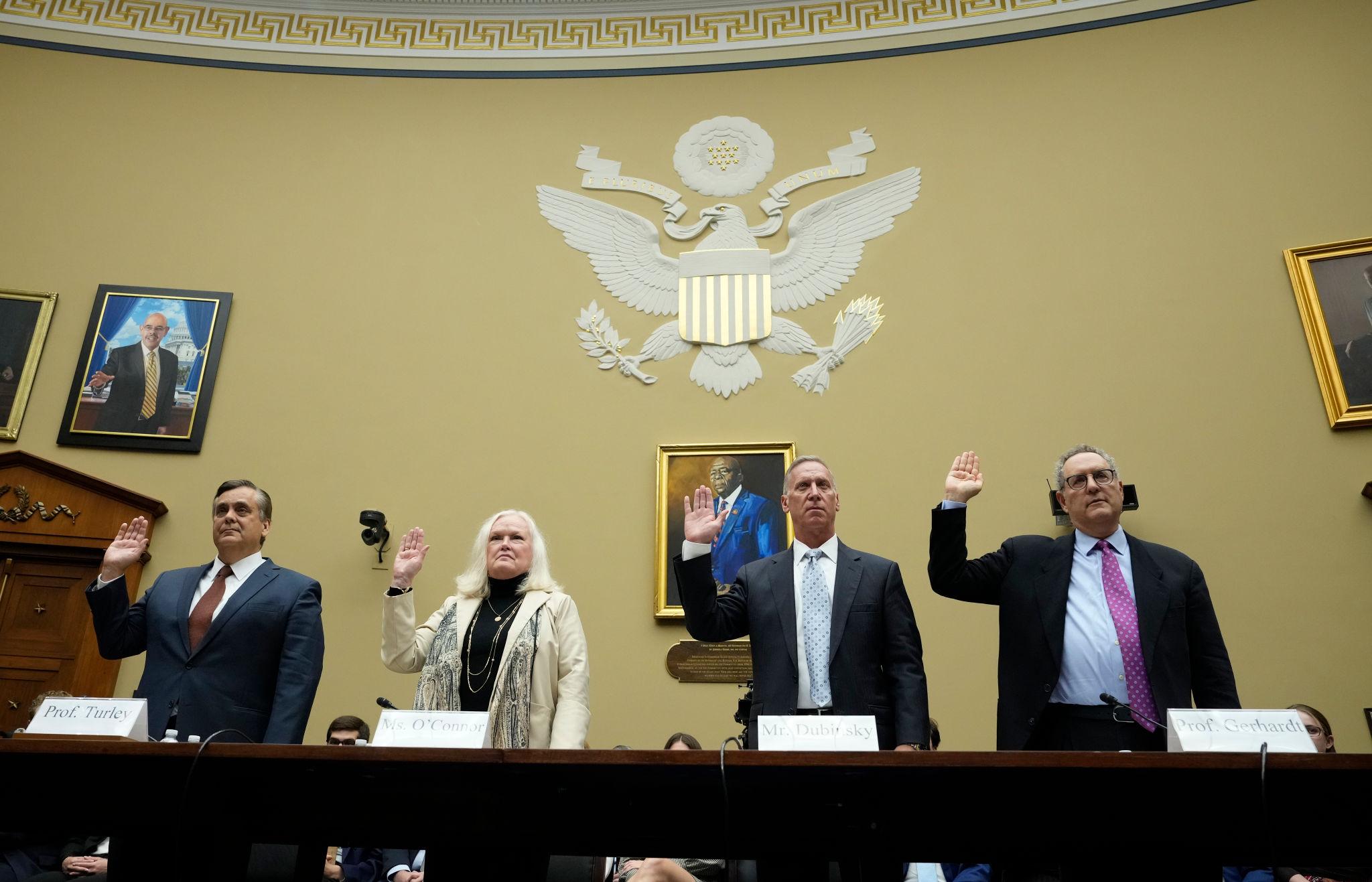

Recent congressional hearings examining the handling of the Jeffrey Epstein case have reignited national conversations about leadership accountability, institutional transparency, and ethical responsibility.
Senior officials faced scrutiny over prior statements, associations, and the Department of Justice’s release of sensitive case files. Lawmakers questioned inconsistencies in public claims and raised concerns about the incomplete redaction of survivors’ personal details. Emotional exchanges during the hearing highlighted a deeper issue that extends beyond political rivalry: how institutions respond when trust is challenged.
While the headlines focus on political tension, the broader implications reach far beyond Washington.
When senior leaders are perceived as inconsistent or evasive, confidence weakens. In modern governance and corporate environments alike, transparency is not optional. Public trust depends on clear communication, responsible action, and accountability under scrutiny.
In the digital era, information moves quickly. Any perceived gap between words and actions can reshape public perception overnight.
The controversy surrounding the release of sensitive information highlights a core institutional responsibility: transparency must never compromise protection.
Releasing documents is one aspect of accountability. Safeguarding personal data is another. When these responsibilities are mishandled, institutions risk deepening harm rather than resolving it.
For organizations across sectors, this moment serves as a reminder that governance is not only about compliance, but about ethical stewardship.
The employment ecosystem runs on trust.
Jobseekers share resumes, identification details, salary histories, and professional records with employers and digital platforms. Employers rely on platforms to handle candidate information responsibly and securely.
When large institutions face criticism over transparency or data handling, it reinforces a universal lesson:
Credibility is built through consistent, accountable systems.
Modern candidates increasingly evaluate companies not only by salary packages, but by:
• Leadership integrity
• Corporate governance standards
• Data protection practices
• Ethical hiring procedures
Employer branding today includes transparency.
As the workforce becomes more informed and digitally connected, expectations are rising. Candidates want clarity in communication. They expect updates after interviews. They expect their information to be protected.
Recruitment platforms and employers that prioritize:
• Verified hiring processes
• Responsible data management
• Clear job descriptions
• Open communication
will maintain stronger long-term credibility.
Public scrutiny of institutional accountability signals a broader shift in societal expectations. Whether in government, corporations, or recruitment systems, leadership is being measured by transparency and responsibility.
For the modern job market, this shift matters.
Trust is no longer assumed. It is earned.
Platforms that embrace ethical standards and transparent hiring practices are better positioned to support both employers and jobseekers in a trust-driven economy.
Written by Inder
Published on February 12, 2026 | 09:45 AM IST
Reuters – Pam Bondi faces questions over Epstein files
https://www.reuters.com/world/us/bondi-face-questions-epstein-files-house-testimony-2026-02-11/
Associated Press – Bondi clashes with Democrats over Epstein documents
https://apnews.com/article/6d7502b80e42e9e9454264e242507bbd
Associated Press – Howard Lutnick acknowledges meetings with Epstein
https://apnews.com/article/2ead9f281ba2491e0581aced50a0533d
The Guardian – Pam Bondi faces angry hearing over Epstein files
https://www.theguardian.com/us-news/2026/feb/11/pam-bondi-democrats-epstein-hearing
Fox News – Lawmakers call for Lutnick resignation over Epstein ties
https://www.foxnews.com/politics/massie-top-oversight-democrat-call-secretary-lutnick-resign-lying-about-alleged-epstein-ties