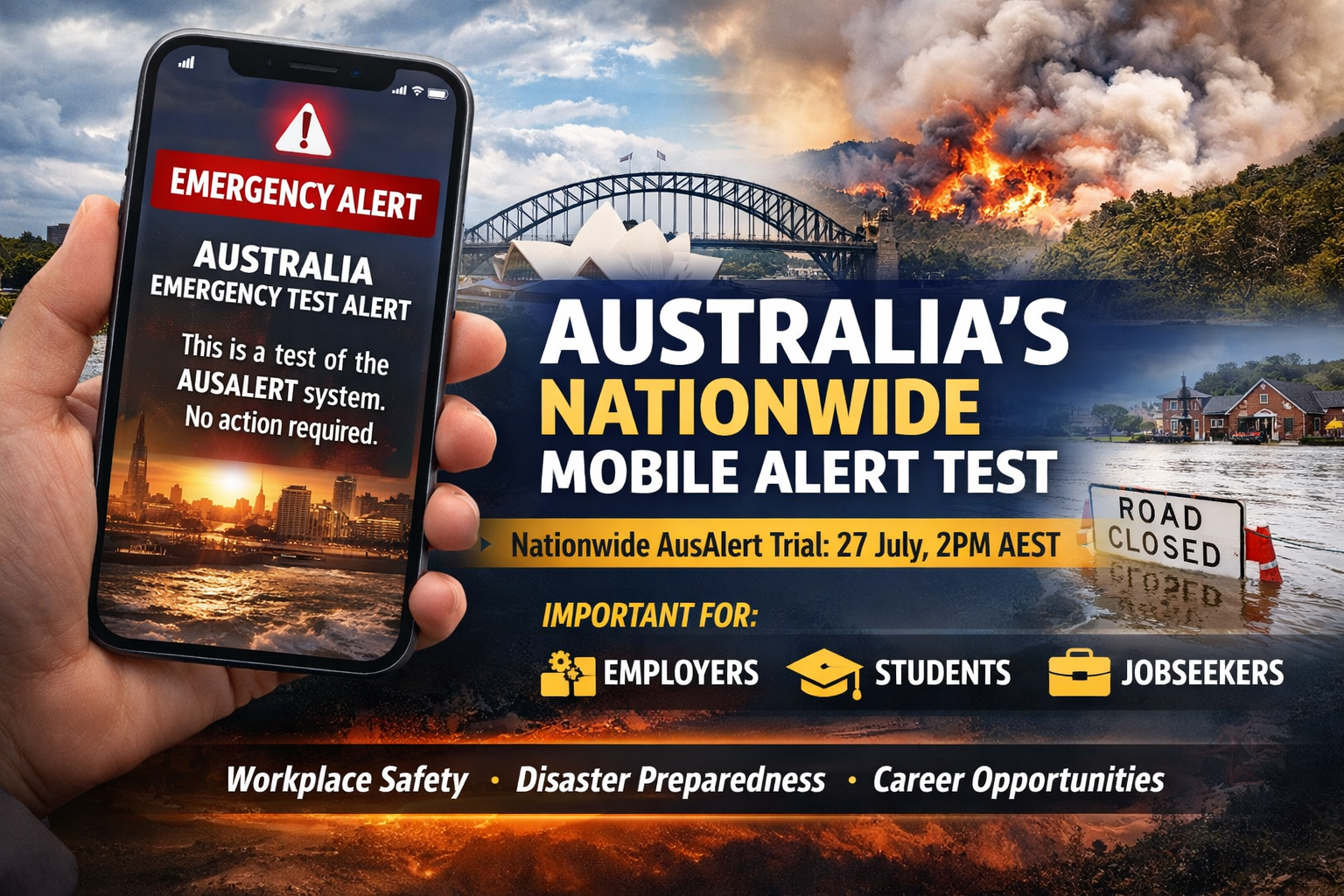
Australia’s Nationwide AusAlert Trial: What Employers, Students & Jobseekers Must Know
Nationwide AusAlert Test Scheduled for 27 July at 2pm AEST
Most Australians will receive a mobile phone alert on 27 July at 2pm AEST as part of a nationwide test of the new emergency warning system, AusAlert.
The alert will be sent to compatible mobile devices across Australia and will override silent or “Do Not Disturb” settings to ensure delivery. This trial marks a major shift in how emergency information will be communicated nationwide.
What Is AusAlert and How Does It Work?
AusAlert is a cell broadcast emergency notification system designed to send messages to mobile devices within a targeted geographic area of approximately 160 metres.
Key features include:
- Works on devices with active SIM cards
- Displays alerts on locked screens
- Operates outside normal SMS services
- Does not collect personal data
- Designed for bushfires, floods, biosecurity threats and major incidents
- The system is expected to become fully operational by October.
Two Types of Emergency Alerts
Critical Alerts
Critical alerts are for life-threatening emergencies.
Fixed maximum volume
Unique ringtone and vibration
Cannot be disabled
Requires immediate action
Priority Alerts
Priority alerts are used for Watch and Act situations.
Less intrusive
Users can opt out
Used when preparation is required
Why Employers Should Pay Attention
Workplace Safety Responsibilities
With alerts reaching devices instantly, employers must update emergency response protocols. Safety compliance and evacuation planning should align with national alert systems.
Employers should:
- Update emergency and evacuation procedures
- Brief employees about alert response
- Ensure remote workers understand emergency protocols
- Integrate mobile alerts into business continuity planning
- Industries highly impacted include construction, agriculture, logistics, education, mining, and tourism.
What This Means for Students and Jobseekers
Emergency Awareness Is a Professional Skill
Understanding how to respond during emergencies is now part of workplace readiness. Employers increasingly expect safety awareness from graduates and interns.
Career Growth in Emergency and Technology Sectors
The expansion of digital emergency systems creates opportunities in:
- Telecommunications
- Cybersecurity
- Disaster management
- Public administration
- Infrastructure and IT systems
Students studying IT, engineering, public policy, environmental sciences, or communications should monitor this sector closely.
Infrastructure Investment and Employment Impact
The system’s projected cost has increased from an estimated $10 million to approximately $132 million. While the budget increase has drawn attention, large-scale national infrastructure projects typically generate employment across technology, security, and public service sectors.
This reflects Australia’s growing focus on digital resilience and disaster preparedness.
Local Trials Across Australia in June
Before the nationwide test, localised trials will take place in:
- Majura, ACT
- Launceston, TAS
- Port Douglas, QLD
- Liverpool, NSW
- Geelong, VIC
- Tennant Creek, NT
- Goomalling, WA
- Port Lincoln, SA
- Queanbeyan, NSW
Employers and educational institutions in these areas should prepare staff and students for test notifications.
The Bigger Workforce Message
Australia is strengthening national emergency communication systems. This signals:
- Increased government digital investment
- Higher workplace safety expectations
- Greater demand for emergency management professionals
- Stronger focus on crisis preparedness in organisations
- For employers, preparedness enhances trust and brand reputation.
News source link:-