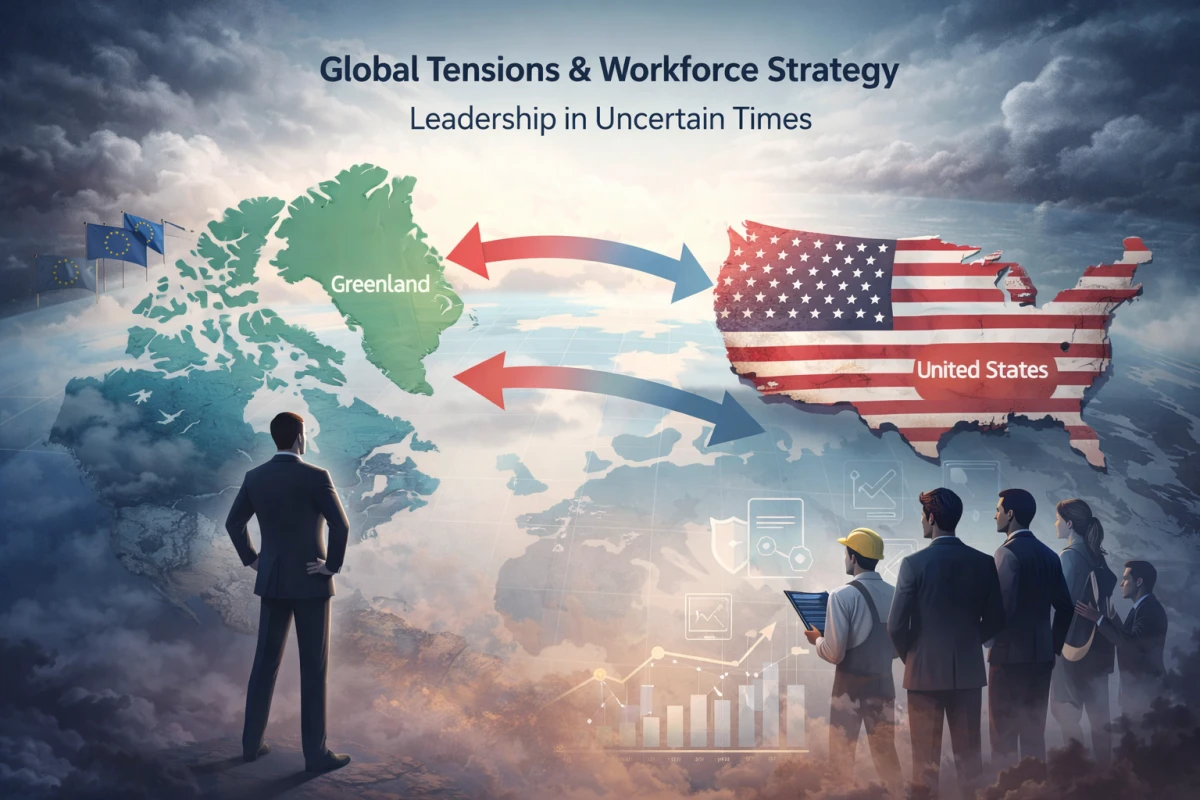

As geopolitical tensions heat up around Greenland and the United States, organizations and professionals are reminded that leadership in an interconnected world must be resilient, transparent, and adaptable. Recent diplomatic friction over Greenland’s future—from sovereignty disputes to economic and security concerns—offers urgent lessons for workforce strategy and career growth in uncertain times.
The Financial Times recently reported that France warned that any U.S. attempt to seize control of Greenland would seriously jeopardize trade ties with Europe. This development underscores how strategic decisions at the highest level can suddenly shift global alliances and corporate risk landscapes.
Tensions over Greenland extend beyond a remote Arctic island. The dispute involves national sovereignty, security strategy, and broader geopolitical dynamics that reverberate across NATO and transatlantic relations. Reports indicate European troops have been sent to Greenland in symbolic support of Danish sovereignty amid “fundamental disagreement” with U.S. overtures.
 |
Some political leaders in the U.S. have characterized control over Greenland as “indispensable” to national security, language that has alarmed both Greenlanders and international allies. Whether or not the U.S. pursues more assertive policy, these developments show how rapidly political rhetoric can escalate into diplomatic, economic, and workforce risk.
For HR leaders and workforce planners, global tensions are not abstract concepts—they directly impact talent markets, supply chains, and employee confidence. When employees perceive instability in the world, they naturally look to their leaders for clarity and reassurance. This creates a pivotal moment for organizational leadership to demonstrate resilience and strategic foresight.
Key questions for HR and business leaders include:
Are our workforce plans robust against geopolitical shocks?
Do our employees trust leadership messaging during uncertain times?
Do we have transparent policies that reinforce consistency and fairness?
When external uncertainty rises, internal alignment becomes vital.
Just as diplomats navigate competing interests without undermining long‑term relationships, organizational leaders must guide teams through ambiguity with clarity and courage. Effective leadership in turbulent periods involves:
🔹 Clear Values and Boundaries
Leaders must articulate foundational principles that hold steady even when circumstances shift.
🔹 Consistent Communication
Regular, honest updates build trust—especially when definitive answers are not immediately available.
🔹 Balanced Strategy
Leaders should weigh long‑term goals with agility to address immediate risks without reactive panic.
Alignment between executive direction and talent strategy becomes essential to maintain morale, engagement, and retention.
Global tensions often lead to heightened regulatory scrutiny, especially around trade, technology, and compliance. Just as nations enforce rules that govern foreign companies, organizations must enforce internal policies with fairness and transparency.
Why this matters:
Consistent policy enforcement builds credibility.
Unpredictable or favor‑based decisions erode employee trust.
An employer brand rooted in integrity attracts and retains top talent.
In uncertain times, employees pay attention not just to what leaders say—but to what they do.
Workforce planning in a volatile world requires leaders to think beyond conventional hiring cycles. Talent acquisition, development, and retention must be designed with adaptability in mind:
Diversify Talent Pipelines: Reduce reliance on single markets or sourcing strategies.
Upskill and Reskill Continually: Prepare teams for shifting roles and technologies.
Equip Leaders to Handle Ambiguity: Build managerial capabilities to support teams through change.
Support Employee Well‑being: Address change fatigue through proactive well‑being and engagement programs.
Organizations that prepare for disruption—not simply growth—will be better positioned to survive and thrive.
Geopolitical developments like the Greenland‑USA tensions also provide career lessons for job seekers and emerging leaders:
✨ Adaptability Is a Competitive Advantage
Professionals who embrace learning and flexibility position themselves for leadership roles.
✨ Observe Leadership in Action
Watch how leaders communicate, handle ambiguity, and stay aligned with core values.
✨ Build Cross‑Functional Skills
A diverse skill set helps you navigate change and makes you more valuable in uncertain contexts.
✨ Prioritize Organizations with Strong Trust Cultures
Company cultures rooted in fairness, clarity, and transparency create stability—even in volatile times.
As global dynamics continue to shift, leaders and professionals must sharpen their strategic vision and people‑centered approaches. The Greenland‑USA tensions remind us that uncertainty at the macro level soon becomes a workforce reality—one that requires grounded leadership, resilient strategy, and the courage to lead through complexity.
#Leadership #WorkforceStrategy #GeopoliticalTensions #GreenlandUSA #HRLeadership #TalentManagement #EmployeeEngagement #OrganizationalResilience #FutureOfWork #ChangeManagement #GlobalLeadership #WorkplaceTrends #PeopleFirst #CareerGrowth #BusinessLeadership