

By Sirjana –searchtalents.co,
New Delhi:
India on Monday strongly pushed back against what it described as “selective and unfair targeting” over its Russia trade ties amid the Ukraine war, while firmly cautioning Poland against extending any form of support — direct or indirect — to Pakistan on issues related to cross-border terrorism.
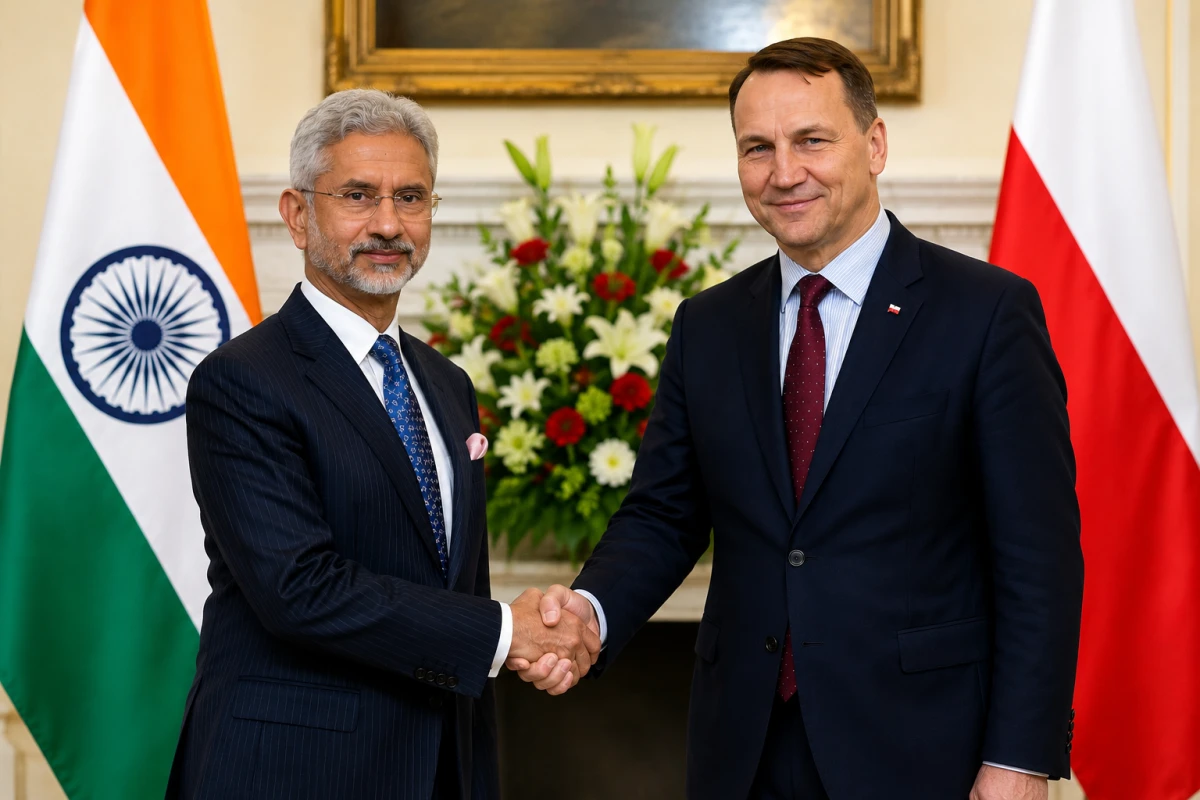
External Affairs Minister S. Jaishankar conveyed New Delhi’s concerns during talks with Polish Deputy Prime Minister and Foreign Minister Radoslaw Sikorski in New Delhi, as the two sides reviewed the expanding India-Poland Strategic Partnership and discussed key global and regional developments.
Welcoming the Polish delegation, Jaishankar noted that the meeting was taking place at a time of “considerable churn” in global affairs, making dialogue between partners even more critical.
India and Poland elevated their relationship to a Strategic Partnership during Prime Minister Narendra Modi’s visit to Warsaw in August 2024. The two countries are now working under an Action Plan 2024-28, focusing on trade, investment, defence cooperation, clean energy, security collaboration, and digital innovation.
Jaishankar said both sides would continue to explore deeper economic and technological engagement.
 |
However, geopolitics quickly dominated the discussion.
Referring to the Ukraine conflict, Jaishankar said he had “candidly” shared India’s position with Sikorski on several occasions in global forums and reiterated it once again in New Delhi.
“The selective targeting of India is both unfair and unjustified,” Jaishankar said.
India has repeatedly expressed discomfort with what it views as pressure tactics aimed at influencing its independent foreign policy choices. New Delhi has maintained that dialogue and diplomacy are the only viable solutions to the Ukraine conflict and has resisted bloc-based alignment.
The second major issue raised was cross-border terrorism.
Jaishankar reminded Sikorski that Poland was well aware of the challenges India faces from terrorism emanating from across its borders.
“Poland should display zero tolerance for terrorism and not help fuel terrorist infrastructure in our neighbourhood,” Jaishankar said — a remark widely seen as a reference to Pakistan.
The statement also appeared linked to Poland’s comments on Kashmir during a visit to Islamabad in October 2025.
India has intensified diplomatic efforts across Europe to ensure consistent positions against terrorism financing and extremist safe havens.
Minister Sikorski broadly echoed India’s concerns.
He agreed that selective tariff targeting was unfair and warned that such practices could destabilise global trade. He also cited recent incidents in Poland, including arson attacks and attempted sabotage of railway infrastructure, calling them examples of trans-border terrorism.
Both leaders agreed on the need for stronger global cooperation against terrorism.
Despite the diplomatic firmness, the meeting reflected strong bilateral momentum:
Bilateral trade: ~USD 7 billion
Indian investment in Poland: Over USD 3 billion
Poland is among India’s largest Central European partners
Both sides expressed confidence that cooperation would continue to expand across sectors.
India’s message to Poland reflects a broader foreign-policy doctrine:
Strategic autonomy over bloc politics
Zero tolerance for terrorism
Fairness in global trade practices
Partnership based on mutual respect
New Delhi made it clear that while it values its European partnerships, it will firmly defend its red lines.
For professionals and future leaders, this diplomatic exchange offers important lessons:
Strong leaders communicate concerns without hesitation.
India’s stance shows that principles should not be compromised for convenience.
Leadership is not aggression — it is composed conviction.
Long-term partnerships grow when leaders address issues directly and respectfully.
Trust in leadership comes from consistency between words and actions.
In careers, just like diplomacy:
Silence weakens influence.
Clarity strengthens leadership.
Professionals who can defend values while maintaining relationships become trusted leaders.
As India and Poland continue strengthening their strategic partnership, New Delhi’s firm articulation of its concerns signals that global cooperation must rest on fairness, sovereignty, and ethical consistency.
For India, the message is clear: partnership is welcome — pressure is not.
At SearchTalents.co, we believe modern leadership is built on confidence, ethics, and responsibility — qualities that define both strong professionals and respected nations.
#IndiaPoland #UkraineWar #SelectiveTargeting #IndianDiplomacy #Jaishankar #ForeignPolicyIndia #RussiaUkraine #Terrorism #ZeroTolerance #Pakistan #GlobalPolitics #StrategicPartnership #IndiaEU #CrossBorderTerrorism #SearchTalents #SearchTalentsInsights #LeadershipLessons #WorldNews