
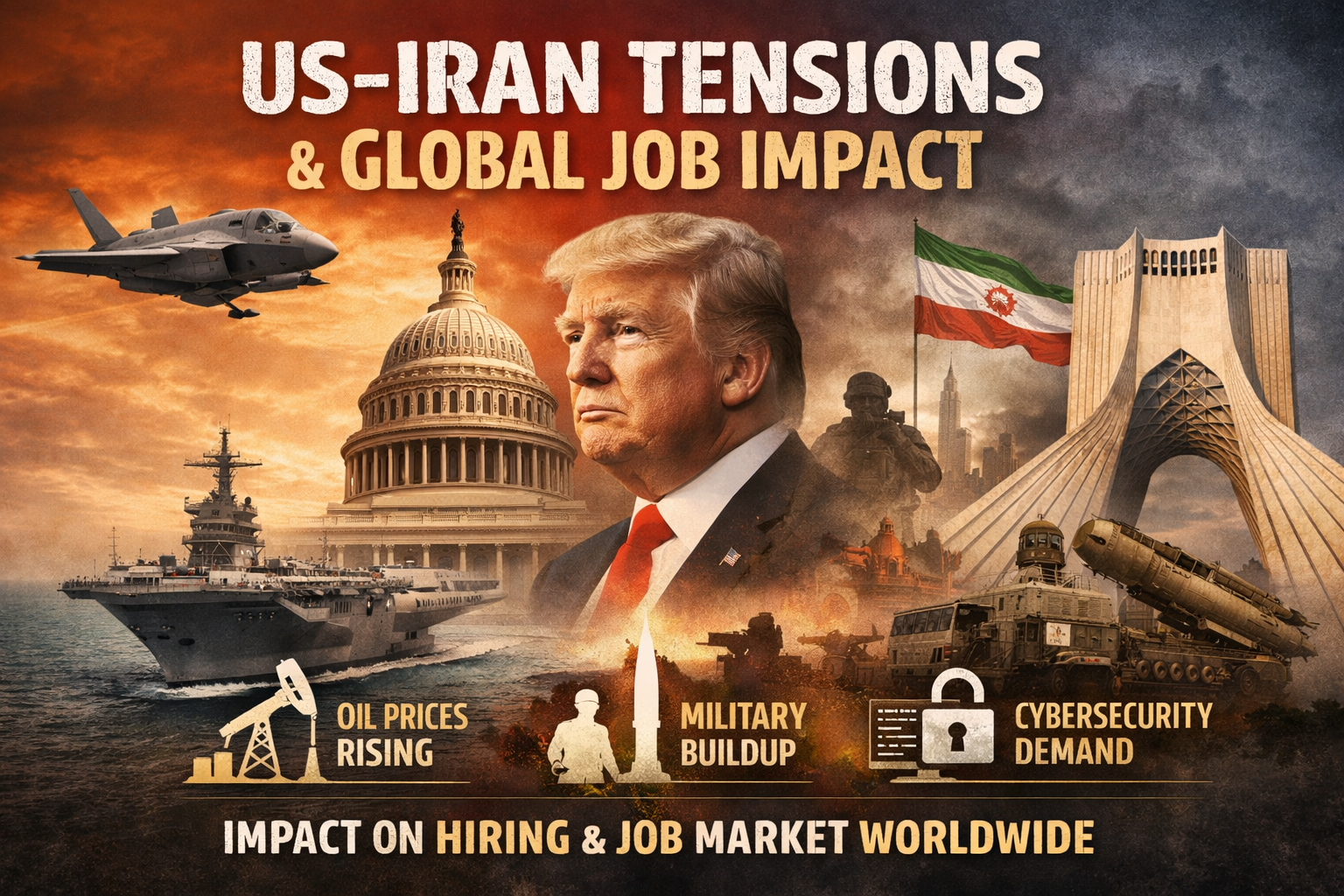

Rising tensions between the United States and Iran have triggered fresh global uncertainty, with reports suggesting the US military is prepared for possible strikes while diplomatic talks continue. According to international media outlets including CNN and The Wall Street Journal, American air and naval deployments in the Middle East have reached their largest scale since the 2003 Iraq conflict.
While President Donald Trump has not made a final decision on military action, the situation has already begun influencing global markets, corporate hiring strategies, and workforce mobility patterns.
For professionals and employers on SearchTalents.co, this is not just geopolitical news. It directly connects to hiring trends, skill demand, and industry stability worldwide.
Source: https://edition.cnn.com/
Periods of geopolitical tension typically affect:
Any disruption in the Middle East often influences oil prices. Rising energy costs can:
Increase hiring in oil, gas, and energy infrastructure
Slow down hiring in manufacturing and logistics due to higher operational costs
Professionals in petroleum engineering, supply chain, energy trading, and maritime logistics may see fluctuating demand.
Source: https://www.wsj.com/
Military build-ups often lead to:
Increased defence contracts
Growth in aerospace manufacturing
Demand for cybersecurity and intelligence roles
Candidates with backgrounds in aviation, electronics, drone technology, AI defence systems, and cybersecurity may see increased opportunities globally.
Escalating tensions frequently raise concerns over cyber warfare. Companies worldwide strengthen:
Network security teams
Threat intelligence divisions
Infrastructure resilience
This benefits skilled IT professionals, especially those certified in cloud security, ethical hacking, and enterprise protection systems.
Recruiters and HR managers should monitor:
Visa delays
Travel restrictions
Regional instability affecting workforce relocation
Companies may:
Pause expansion in unstable markets
Shift investment toward secure regions
Prioritise risk management and compliance hiring
Uncertainty often accelerates remote hiring models, allowing organisations to secure talent without geographic exposure.
SearchTalents.co is seeing growing interest in remote IT, cybersecurity, finance, and operations roles as companies hedge against regional risks.
Large-scale geopolitical uncertainty typically leads to:
Slower decision-making cycles
More risk-based candidate assessments
Greater emphasis on stability, adaptability, and crisis management experience
Candidates who demonstrate:
Cross-border experience
Risk management knowledge
Ability to operate under uncertainty
will hold a competitive edge.
If tensions escalate into prolonged conflict:
Oil prices may spike
Inflationary pressures could rise
Stock markets may face volatility
Hiring may tighten in consumer-facing industries
However, sectors such as defence, cybersecurity, energy infrastructure, and strategic consulting may expand significantly.
India Today reported that the White House has been briefed and that Trump is weighing diplomatic versus military options.
https://www.indiatoday.in/world/us-news/story/us-prepared-to-strike-iran-this-weekend-but-trump-yet-to-take-call-report-2870718-2026-02-19
The Times of India highlighted that this is the largest regional air deployment since the Iraq invasion.
https://timesofindia.indiatimes.com/world/middle-east/biggest-air-deployment-in-middle-east-since-2003-iraq-invasion-us-to-strike-iran-this-week/articleshow/128534513.cms
The Guardian confirmed that Trump has not yet authorised action but is consulting national security advisers.
https://www.theguardian.com/us-news/2026/feb/18/trump-iran-us-military-reports