
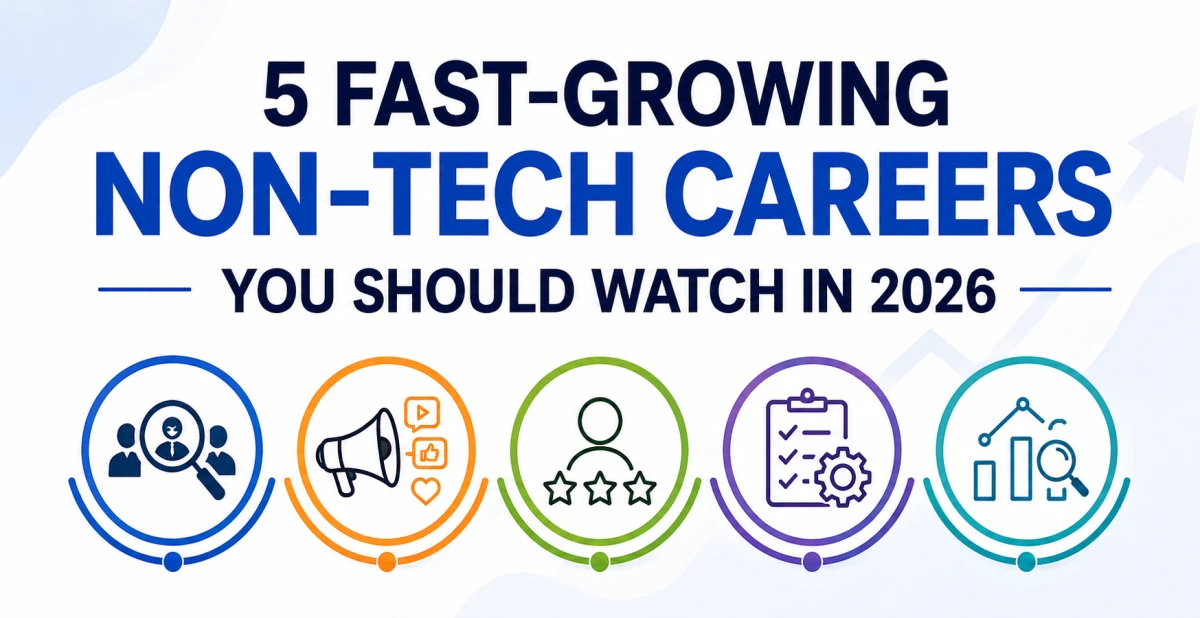
The job market is changing fast. For a long time, many people believed that the best career opportunities were only available in technology, software development, coding or data science. But today, that idea is no longer completely true. While technology is still growing, many non-tech careers are also becoming important because companies need people who can manage customers, teams, hiring, operations, communication and business growth.
In 2026, employers are not only looking for technical skills. They are also looking for people who can solve problems, communicate clearly, understand business needs, manage relationships and help organisations grow. This is creating strong career opportunities for students, freshers, career changers and professionals who do not come from a technical background.
Here are five rising non-tech roles that are shaping the modern job landscape.
Hiring the right people has become one of the biggest priorities for companies. As businesses grow, they need skilled recruiters who can find, attract and shortlist the best candidates. This is why talent acquisition and recruitment roles are becoming more valuable.
A recruitment specialist is responsible for understanding job requirements, sourcing candidates, screening resumes, conducting initial interviews and coordinating with hiring managers. In many companies, recruiters also play a role in employer branding, candidate experience and workforce planning.
This role is a good option for people who enjoy communication, networking and understanding people. You do not need to be from a technical background to start in recruitment. Strong communication skills, confidence, basic HR knowledge and the ability to judge candidate suitability can help you grow in this field.
For job seekers, recruitment is also a career where experience builds quickly. Once you understand how hiring works, you can move into senior recruiter, talent acquisition manager, HR business partner or people operations roles.
Every business wants visibility. Whether it is a startup, education provider, job portal, healthcare company, real estate brand or retail business, digital presence matters. This has increased demand for digital marketing and content professionals.
A digital marketing specialist works on online campaigns, social media, SEO, email marketing, website content and brand communication. A content specialist focuses on writing blogs, social media posts, website copy, newsletters and promotional content that connects with the audience.
This role is suitable for people who are creative, research-oriented and comfortable with online platforms. You do not need coding knowledge to enter this field. However, you should understand audience behaviour, keywords, basic analytics, content planning and brand messaging.
Digital marketing is also a flexible career path. You can start as a content writer, social media executive or SEO assistant and later grow into roles such as digital marketing manager, content strategist, brand manager or growth marketing specialist.
Customer success is one of the most important non-tech roles in modern companies. Businesses do not only want to sell products or services; they also want to make sure customers use them successfully. This is where customer success professionals come in.
A customer success manager helps customers understand a product or service, solves their concerns, improves satisfaction and builds long-term relationships. The main goal is to make sure customers continue using the service and get real value from it.
This role is common in SaaS companies, education platforms, recruitment platforms, healthcare services, finance companies and many other industries. It is a strong option for people who are good at communication, problem-solving and relationship management.
You do not need to be a software engineer to work in customer success. You only need to understand the product, listen carefully to customers and explain solutions clearly. With experience, customer success professionals can grow into account management, client relationship management, customer experience leadership or business development roles.
Companies run many projects at the same time. These projects may involve marketing campaigns, hiring drives, training programs, business launches, internal systems, client work or operational improvements. To manage these activities smoothly, companies need project coordinators and project managers.
A project coordinator helps organise tasks, follow up with teams, maintain timelines, prepare reports and make sure work is moving in the right direction. A project manager takes broader responsibility for planning, execution, communication and delivery.
This role is ideal for people who are organised, disciplined and good at handling multiple tasks. You do not need a technical degree to start as a project coordinator. Many people enter this field through administration, operations, marketing, HR or customer support backgrounds.
As businesses become more structured, project management skills are becoming useful across almost every industry. Professionals who can manage deadlines, people and resources are valuable because they help companies save time and avoid confusion.
Business operations roles are growing because companies want to work smarter, faster and more efficiently. A business operations analyst studies how a company works and helps improve processes, reporting, coordination and performance.
This role may include tracking business data, preparing reports, improving workflows, supporting managers, coordinating between departments and identifying areas where the company can reduce delays or improve results.
Although the word “analyst” may sound technical, many business operations roles do not require advanced coding. Basic Excel, reporting, communication, documentation and problem-solving skills are often enough to get started. As you grow, you can learn tools such as CRM systems, dashboards and business reporting platforms.
This career is suitable for people who enjoy understanding how businesses work. It can lead to roles in operations management, strategy, business analysis, process improvement or general management.
The rise of automation and AI has changed how companies work, but it has not removed the need for human skills. In fact, many employers now value professionals who can combine digital awareness with communication, creativity, judgement and leadership.
Non-tech roles are important because businesses still need people to build relationships, manage teams, understand customers, write clear content, hire talent and improve operations. These are areas where human decision-making and emotional intelligence still matter.
For freshers and career changers, this is good news. You do not need to force yourself into coding or software development if your strengths are in communication, business, people management, writing, marketing or organisation. There are many career paths where these skills can help you build a stable future.
To succeed in non-tech careers, job seekers should focus on practical skills. Communication is one of the most important skills because almost every role involves speaking with customers, candidates, clients or internal teams.
Problem-solving is also important. Employers want people who can understand a situation, think clearly and suggest useful solutions. Basic digital skills are helpful too, such as using spreadsheets, email tools, CRM platforms, job portals, social media platforms and reporting dashboards.
Other useful skills include time management, writing, presentation, teamwork, research, adaptability and professional confidence. These skills may look simple, but they can make a big difference in interviews and workplace performance.
The future of work is not only about technology. It is also about people, communication, business growth and customer experience. Non-tech roles are becoming stronger because companies need professionals who can connect strategy with real execution.
For job seekers, this opens many opportunities. Whether you are a fresher, graduate, career changer or experienced professional, you can explore non-tech roles that match your strengths. Recruitment, digital marketing, customer success, project coordination and business operations are just a few of the growing career paths worth considering.
The best step is to start building relevant skills, create a strong resume and apply for roles that match your interests. With the right preparation and confidence, non-tech careers can offer strong growth, stability and long-term success in 2026 and beyond.
SearchTalents helps job seekers explore new opportunities and connect with employers across different industries. If you are planning your next career move, start exploring roles that match your skills and future goals.