You may have the right experience. You may have the right skills. You may even be applying for jobs that genuinely match your background.
But there is another question that every job seeker should consider:
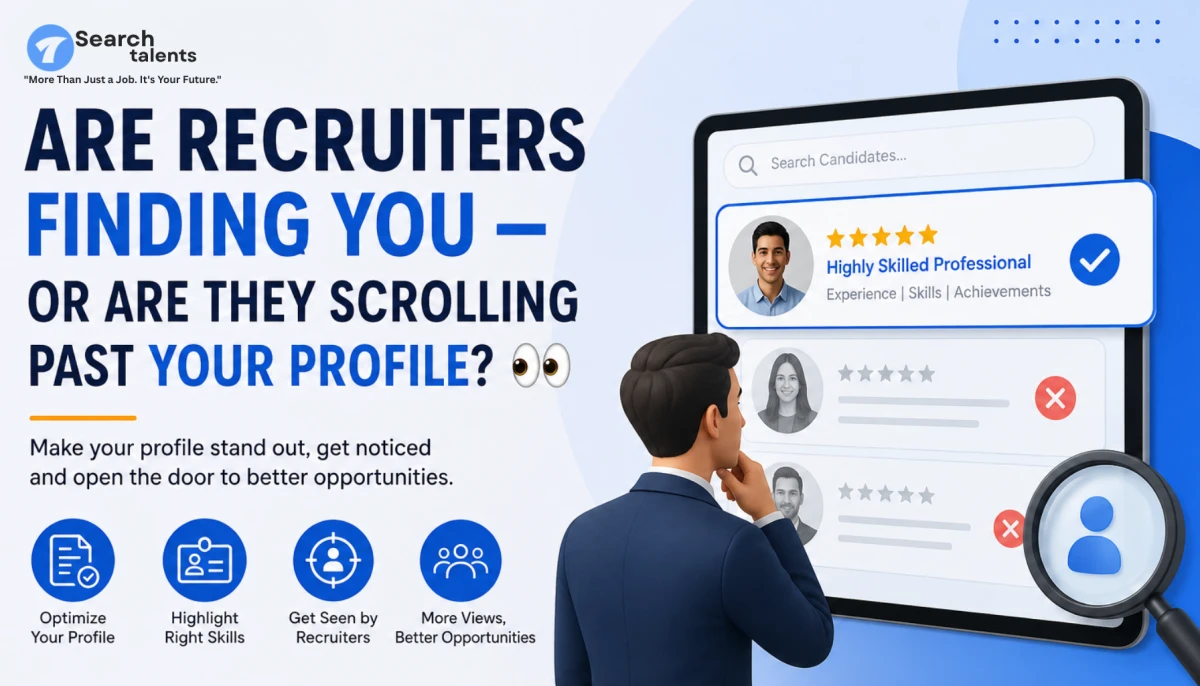
When recruiters come across your profile, do they stop to learn more about you — or do they keep scrolling?
Today’s job search is not only about submitting applications. Recruiters and employers also search online platforms, candidate databases and professional networks to discover people who may be suitable for open roles.
This means your professional profile is working for you even when you are not actively applying.
A clear, complete and relevant profile can help recruiters understand your skills within seconds. A vague or outdated profile can make a strong candidate easy to overlook.
So, how do you make sure your profile attracts attention for the right reasons?
Here are the areas that matter most.
1. Make Your Headline Tell Recruiters Who You Are
Your profile headline is one of the first things a recruiter sees, so it should communicate more than your current job title.
For example:
Marketing Executive
is accurate, but it does not tell the recruiter very much.
A stronger version could be:
Digital Marketing Executive | SEO | Content Strategy | Social Media | Lead Generation
The second version immediately communicates the candidate’s professional area and key capabilities.
The same approach works across industries.
Instead of:
Administrative Assistant
you could use:
Administrative Assistant | Customer Service | Scheduling | CRM | Office Support
Your headline does not need to contain every skill you have. It should simply make your professional direction clear enough that the right recruiter wants to continue reading.
2. Use the Skills Employers Are Actually Searching For
Recruiters cannot easily identify skills that are missing from your profile.
If you have experience with customer service, stakeholder management, Microsoft Excel, recruitment, CRM systems, project coordination or another relevant skill, make sure those capabilities appear naturally in your profile.
Start by looking at several job advertisements for the type of role you want.
Pay attention to the skills and terminology that appear repeatedly.
For example, recruitment advertisements may frequently mention:
Candidate sourcing
Screening
Talent acquisition
Stakeholder management
Onboarding
Applicant tracking systems
If those skills genuinely match your experience, include them in your profile.
This is not about filling your profile with random keywords. It is about making sure the language you use reflects the language employers use when searching for candidates.
Relevant keywords improve clarity. Keyword stuffing does not.
3. Stop Using Generic Statements Without Evidence
Many professional profiles contain statements such as:
Hard-working professional.
Excellent communicator.
Strong team player.
Highly motivated individual.
There is nothing necessarily wrong with these qualities, but almost anyone can make the same claims.
Recruiters are more likely to pay attention when you explain what you actually do.
Instead of:
“I am a hardworking sales professional with excellent communication skills.”
consider:
“Sales professional experienced in customer acquisition, account management and outbound prospecting, with a focus on building strong client relationships.”
The second version provides useful information about the candidate.
Whenever possible, replace general descriptions with examples of your actual capabilities.
Ask yourself:
What can I do? What problems can I solve? Who have I supported? What results have I helped achieve?
Those answers create a much stronger professional profile.
4. Turn Your Experience Into Achievements, Not a Job Description
A common mistake is copying responsibilities from an old job description directly into a profile.
For example:
Responsible for customer enquiries.
Responsible for reporting.
Responsible for social media.
These statements describe duties, but they do not show much about the candidate’s contribution.
Try adding context.
Instead of:
Managed customer enquiries.
write:
Managed daily customer enquiries across phone and email, resolving service issues and maintaining accurate customer records.
Instead of:
Managed social media accounts.
write:
Planned and published social media content to support brand visibility, engagement and audience growth.
Where genuine numbers are available, use them.
You could mention the number of customers supported, projects completed, team members trained, campaigns managed or improvements achieved.
However, do not force statistics into every sentence.
Specific and credible information is more valuable than exaggerated achievements.
5. Make Your Profile Easy to Understand Within Seconds
Recruiters often review many candidates, which means your profile should not require detective work.
Within a short time, someone viewing your profile should understand:
What type of professional you are
What experience you have
Which skills you offer
Which industry you understand
What kind of role you may suit
Pay particular attention to your headline, professional summary, recent experience, skills, qualifications and location.
Avoid long sections filled with unnecessary information.
Your profile should be detailed enough to establish credibility but clear enough that a recruiter can quickly recognise your strengths.
Think of it as your professional introduction.
You want the recruiter to think:
“This person could be relevant. I should keep reading.”
6. Write a Strong Professional Summary
Your summary is an opportunity to connect the different parts of your experience.
A good summary should not simply repeat your job title.
It should briefly explain your professional background, strongest skills and career direction.
For example:
“Customer service professional with experience supporting clients, managing enquiries and maintaining accurate administrative records. Skilled in communication, CRM systems and customer relationship management, with an interest in opportunities across customer success and account support.”
This gives recruiters far more context than:
“I am looking for new opportunities and am a quick learner.”
Your summary should help answer one important recruiter question:
Why should I continue looking at this candidate?
7. Keep Your Resume and Online Profile Consistent
Your resume and professional profile do not need to contain exactly the same wording, but they should tell the same career story.
If your profile says you are focused on marketing while your resume presents you primarily as an administrator, recruiters may become confused about your direction.
Make sure the following details remain consistent:
Employment dates
Job titles
Main areas of experience
Core skills
Qualifications
Career direction
If you are changing industries, explain the connection rather than leaving recruiters to guess.
For example:
“Customer service professional transitioning into recruitment, bringing strong experience in client communication, relationship management and administrative coordination.”
That simple explanation helps make the career transition understandable.
8. Do Not Underestimate Transferable Skills
You do not always need experience in the exact same job title to have relevant skills.
Someone working in hospitality may have developed:
Customer service
Communication
Teamwork
Time management
Problem-solving
A retail supervisor may already have experience in:
Leadership
Staff training
Sales
Stock management
Customer relationships
An administrative professional may have valuable capabilities in:
Scheduling
Reporting
CRM systems
Stakeholder communication
Documentation
Coordination
These are transferable skills.
If you are moving into a new industry, identify which existing capabilities could still provide value to an employer.
Do not make recruiters work out that connection themselves.
Show them.
9. Keep Your Profile Current
An outdated profile can create unnecessary doubts.
If your profile still shows an old position, missing qualification or outdated skills, a recruiter may assume you are no longer active or interested in opportunities.
Review your profile regularly and update:
Your current position
Recent responsibilities
New skills
Certifications
Qualifications
Career interests
Professional summary
You should also remove information that is no longer relevant to the roles you want.
Your profile should represent where your career is going, not simply provide a historical record of everything you have ever done.
10. Make Sure Recruiters Know What Makes You Different
Getting found is only the first step.
Once a recruiter opens your profile, you still need to give them a reason to remember you.
Your profile should communicate your particular combination of:
Experience + Skills + Knowledge + Achievements + Career Direction
For example, thousands of candidates may have customer service experience.
But perhaps your background combines:
Customer Service + CRM + Administration + Sales Support
That combination can position you differently.
Another candidate may offer:
Digital Marketing + SEO + Content + Analytics
The goal is not to claim that you are better than every other candidate.
The goal is to make your professional value clear enough that the right employer can recognise it.
11. Do Not Only Wait for Recruiters to Find You
A strong profile improves your visibility, but your job search should still be proactive.
Search for roles that match your experience and career goals. Read job descriptions carefully. Tailor your application. Keep developing relevant skills.
Most importantly, avoid sending the exact same application everywhere.
A smaller number of well-matched applications can often be more valuable than applying randomly to dozens of positions.
Ask yourself before applying:
Does my profile make it obvious why I am suitable for this role?
If the answer is no, improve the profile before pressing Apply.
Your Profile Should Work Even When You Are Offline
Your professional profile is more than an online resume.
It is often one of the first impressions recruiters and employers have of you.
Make that impression count.
Use a clear headline. Highlight relevant skills. Explain your achievements. Keep your experience current. Use recognised industry terminology. Make your career direction easy to understand.
Because sometimes the difference between being overlooked and being contacted is not necessarily having more experience.
It is presenting the experience you already have more effectively.
Turn Your Next Profile View Into a Career Opportunity
Once your professional profile is ready, the next step is finding opportunities that match your experience, skills and career goals.
At SearchTalents.co, job seekers can explore employment opportunities and take the next step in their career journey.
Whether you are searching for your first professional role, planning a career change or looking for your next opportunity, make sure your profile tells employers exactly why they should stop scrolling.
Explore opportunities on SearchTalents.co and put your skills in front of employers looking for talent like you.
Because being qualified is important — but being noticed can open the door.
Use a clear professional headline, relevant industry keywords, updated skills and detailed work experience that matches the roles you want.
Your profile may be missing relevant keywords, skills or a clear career direction. Improving these areas can make your profile more noticeable.
Yes. Recruiters often use skills, job titles, locations and experience-related keywords to identify candidates who match their vacancies.
Accurate employment details, genuine achievements, relevant qualifications, updated skills and a professional summary help build credibility with employers.
Yes. Specific achievements show recruiters what you have contributed in previous roles rather than simply listing your daily responsibilities.
Review it whenever you gain a new skill, qualification, responsibility or job. Keeping your information current helps recruiters understand your latest experience.
A strong headline, relevant skills, clear experience and measurable achievements can quickly communicate why a candidate may suit an available role.
Yes. A well-structured profile can make your experience easier for recruiters to understand and help you present yourself more effectively to employers.
No. Keep your profile strong, but also actively search and apply for suitable opportunities through platforms such as SearchTalents.co.