
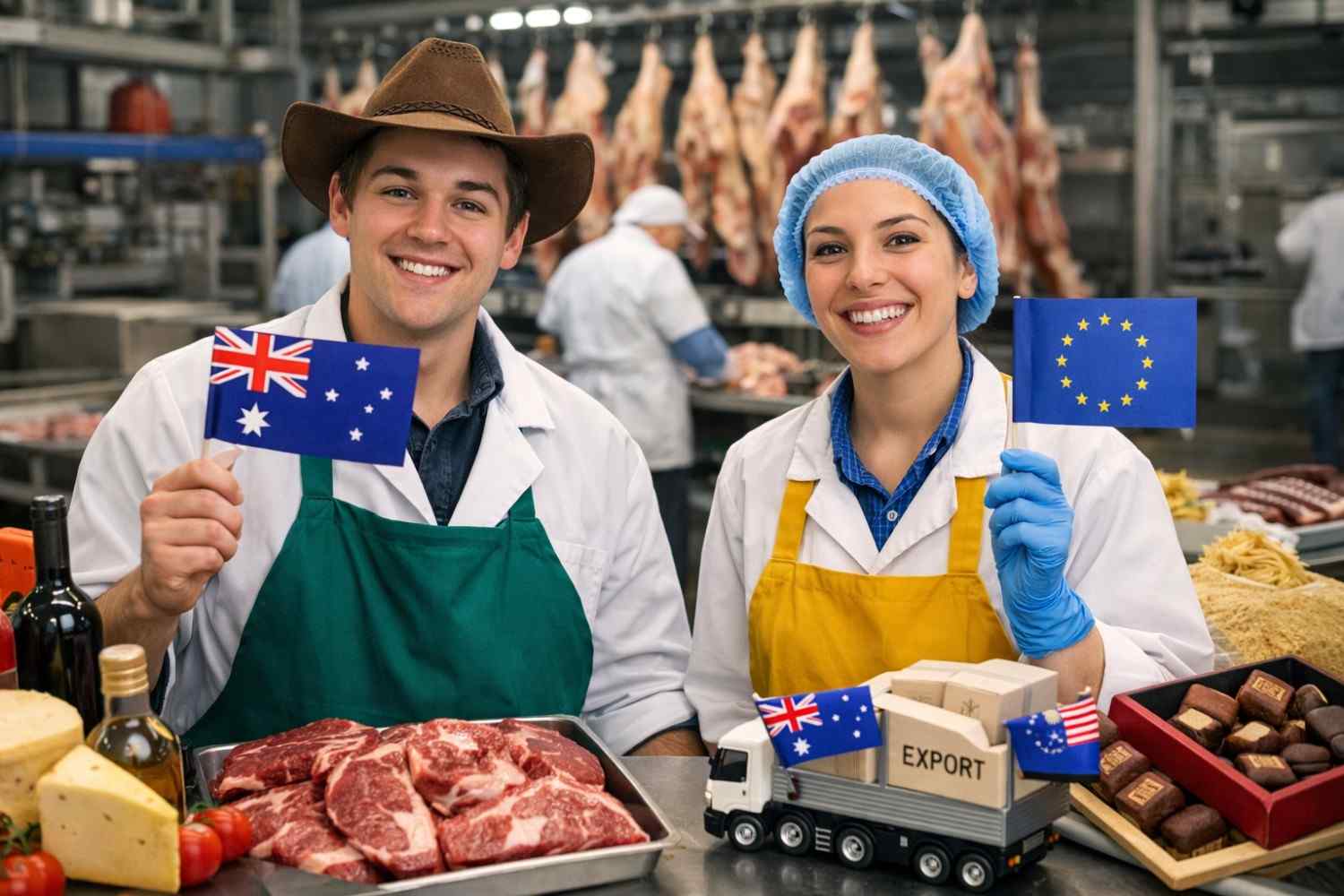

Australia–EU Trade Deal Creates Jobs for Students and Employers

1774329259_australia-eu-trade-deal-creates-jobs-for-students-and-employers.jpeg

Australia’s newly signed free trade agreement with the European Union is set to reshape not only exports but also job opportunities and career pathways for both students and employers across the country.

The deal, valued at around A$10 billion, removes most tariffs on Australian exports, allowing products like beef, wine, seafood, dairy, wheat and barley to enter European markets more competitively.

What’s Changing Under the Deal

  • Beef export quota increased to 30,000 tonnes (from 3,389 tonnes)
  • Tariffs removed on key agricultural exports
  • Australian wine producers to save around A$37 million
  • Cheaper European imports like wine, chocolate, pasta and biscuits

The agreement also includes rules around food naming rights, allowing Australian producers to continue using names like parmesan, while terms like prosecco will gradually phase out in export markets.

Impact on Employers and Businesses

For Australian employers, this deal brings strong growth potential, especially in:

  • Agriculture and meat processing
  • Export and logistics companies
  • Supply chain and distribution networks
  • Food production and packaging industries

With increased exports, businesses will need to expand operations, leading to higher demand for skilled workers.

 Key roles expected to grow:

  • Supply Chain Coordinators
  • Export Documentation Officers
  • Logistics Managers
  • Quality Assurance Specialists

However, industry experts have noted that the beef quota is still lower than expected, meaning businesses must remain competitive and efficient.

 Opportunities for Students and Job Seekers

This trade deal is a major opportunity for students looking to enter global industries.

 High-demand career areas:

  • Agribusiness and Food Technology
  • International Business and Trade
  • Logistics and Supply Chain Management
  • Export Compliance and Documentation

As companies expand into European markets, there will be more internships, graduate roles and entry-level positions.

 Students who gain skills in:

  • Global trade regulations
  • Digital supply chains
  • Data analysis and logistics systems

will have a strong advantage in the job market.

 Beyond Trade: Long-Term Economic Growth

The agreement also strengthens cooperation between Australia and the EU in:

  • Defence and security
  • Critical minerals like lithium and tungsten
  • Technology and space sectors

This signals long-term economic collaboration, which will further influence future job markets and emerging industries.

Why This Matters for the Future Workforce

This deal highlights how global trade agreements directly impact employment.

For both employers and students, success will depend on:

  • Adapting to global markets
  • Building industry-relevant skills
  • Understanding international trade systems

Sources

#AustraliaEUDeal #JobsAustralia #StudentCareers #TradeJobs #AgricultureJobs #LogisticsCareers #GlobalTrade #EmployersHiring #ExportBusiness #SupplyChainJobs #InternationalTrade #CareerGrowth2026

Frequently Asked Questions

The trade deal is expected to increase hiring across agriculture, logistics and export sectors as businesses expand into European markets. This growth will require more workers to manage production, supply chains and international trade operations.

Career demand will rise in agribusiness, supply chain management and international trade roles. At the same time, support areas such as compliance, logistics coordination and quality assurance will also see steady growth.

Students and graduates will benefit from more internships, entry-level roles and graduate programs in export-driven industries. Employers will prefer candidates who understand global trade systems and logistics operations.

The agreement reduces tariffs, making Australian exports more competitive in European markets. This allows businesses to expand operations, increase revenue and explore new international opportunities.

Industries such as agriculture, food production and logistics are expected to see the most growth. These sectors will benefit directly from improved market access and reduced trade barriers.

Employers are increasingly looking for skills in supply chain management, logistics and trade compliance. Knowledge of international markets and export processes will also be highly valuable.

The agreement covers key exports such as beef, wine, dairy, seafood, wheat and barley. These products will gain easier access to European markets due to reduced tariffs.

Yes, European imports like wine, chocolate and pasta are likely to become more affordable. Lower tariffs will reduce costs for both businesses and consumers.

The deal strengthens economic ties between Australia and the European Union. It also supports long-term trade growth, investment and job creation across multiple industries.