
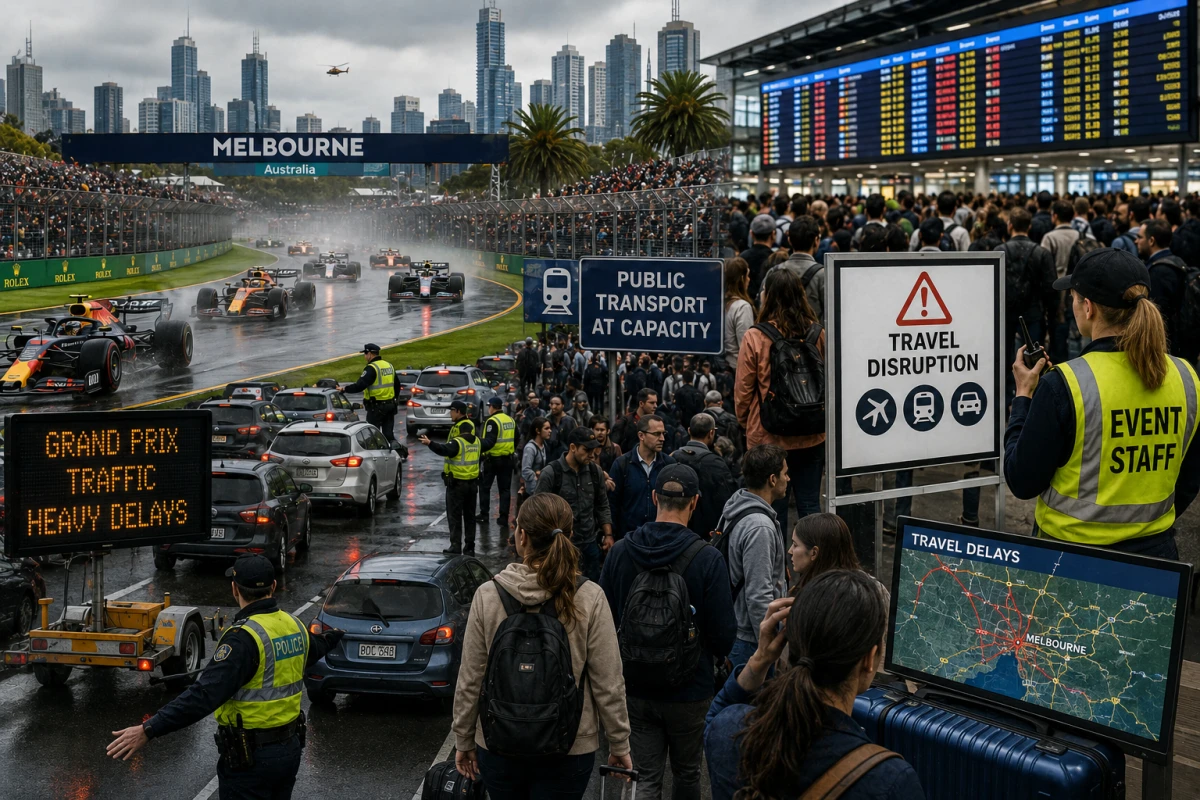

Australian Grand Prix Travel Chaos: What It Means for Global Jobs, Aviation Careers & Event Management Opportunities

1772520089_australian-grand-prix-travel-chaos-what-it-means-for-global-jobs-aviation-careers-event-management-opportunities.jpg

The 2026 Australian Grand Prix is set to go ahead without disruption despite major global travel challenges triggered by escalating Middle East tensions. While nearly 1,000 Formula 1 staff had to rearrange flights — with 500 reportedly travelling via chartered aircraft — organisers remain confident that fans will see “no impact” when the season opens in Melbourne.

However, beyond the racetrack, this situation highlights something bigger: the growing demand for skilled professionals in aviation, logistics, event management, crisis coordination, and international operations.

Global Disruption, Global Opportunity

Australian Grand Prix organisers confirmed that travel changes were handled efficiently, with Formula 1 coordinating charter flights from Europe due to disrupted routes via Qatar and the UAE.

Formula One stated it is “closely monitoring” the situation, especially with upcoming races scheduled in Bahrain and Saudi Arabia in April.

While fans may not notice any difference, behind the scenes, large-scale logistics planning has been critical.

For students and job seekers, this is a powerful example of how global industries rely on skilled talent in:

  • Aviation & airline operations
  • International logistics & freight management
  • Sports management
  • Crisis response coordination
  • Global supply chain planning
  • Risk management

Aviation & Logistics Careers in Focus

With 500+ F1 personnel transported via charter planes and freight shipments already secured, this event showcases how:

  • Airlines must adapt quickly to geopolitical disruption
  • Logistics teams must reroute cargo efficiently
  • Event organisers require rapid contingency planning
  • For students studying:
  • Diploma of Logistics
  • Aviation Management
  • Business & Leadership
  • International Trade
  • Event Management

Real-world examples like this demonstrate strong career potential in global industries.

What Students Can Learn From This

Even when global airspace faces restrictions, major events continue through strategic workforce planning.

  • Key employability lessons include:
  • Crisis planning skills are highly valued.
  • International coordination experience improves career prospects.
  • Adaptability is critical in global careers.
  • Communication and leadership skills drive operational success.

Employers increasingly seek candidates who understand global mobility risks and contingency planning.

Why Employers Should Pay Attention

For businesses involved in:

  • Travel & Tourism
  • International Events
  • Aviation
  • Motorsport & Sports Management
  • Freight & Supply Chain
  • The F1 situation highlights the need to invest in:
  • Skilled operations managers
  • Risk assessment professionals
  • Logistics coordinators
  • Crisis management teams

Talent with international exposure will continue to be in demand as geopolitical disruptions reshape global travel.

The Bigger Picture for Job Seekers

The Australian Grand Prix proceeding without disruption proves that global industries do not stop — they adapt.

If you're a student or professional looking to build a career in:

  • Aviation
  • Global logistics
  • Event management
  • International business
  • Sports operations

Now is the time to gain qualifications and industry-ready skills.

SearchTalents.co connects ambitious individuals with career pathways in high-growth global industries.

Final Insight

While fans will focus on racing performance, behind the scenes this event is a masterclass in global workforce coordination. In a world where uncertainty is common, skilled professionals who can adapt quickly will always be in demand.

For students, employers, and job seekers, the message is clear: global challenges create global career opportunities.


Sources

BBC Sporthttps://www.bbc.com/sport

Formula 1https://www.formula1.com

Australian Grand Prix Corporationhttps://www.grandprix.com.au

Reutershttps://www.reuters.com/world

International Air Transport Associationhttps://www.iata.org

Frequently Asked Questions

Leaders must adapt their style to different personalities. Ignoring individual motivations can create friction and disengagement.

It means building trust, recognizing contributions, and creating connection before demanding results.

Teams evolve. Flexible leadership encourages growth and collaboration, while rigidity often leads to resistance.

No. Organisers of the Australian Grand Prix confirmed there will be no impact on the opening race, as charter flights and logistics adjustments have been arranged.

Flight routes through parts of the Middle East were affected due to regional conflict, requiring travel changes for personnel involved in Formula One operations.

Formula 1 coordinated charter aircraft and restructured travel schedules to ensure teams, drivers, and technical staff arrived in Melbourne on time.

Airspace restrictions increase demand for crisis planners, route analysts, and aviation operations managers who can adapt quickly to disruptions.

Freight coordinators, supply chain managers, and risk management professionals play a key role in rerouting cargo and ensuring event equipment arrives safely.

Yes. Charter services often become essential during commercial route disruptions, creating opportunities in aviation management and operations.