
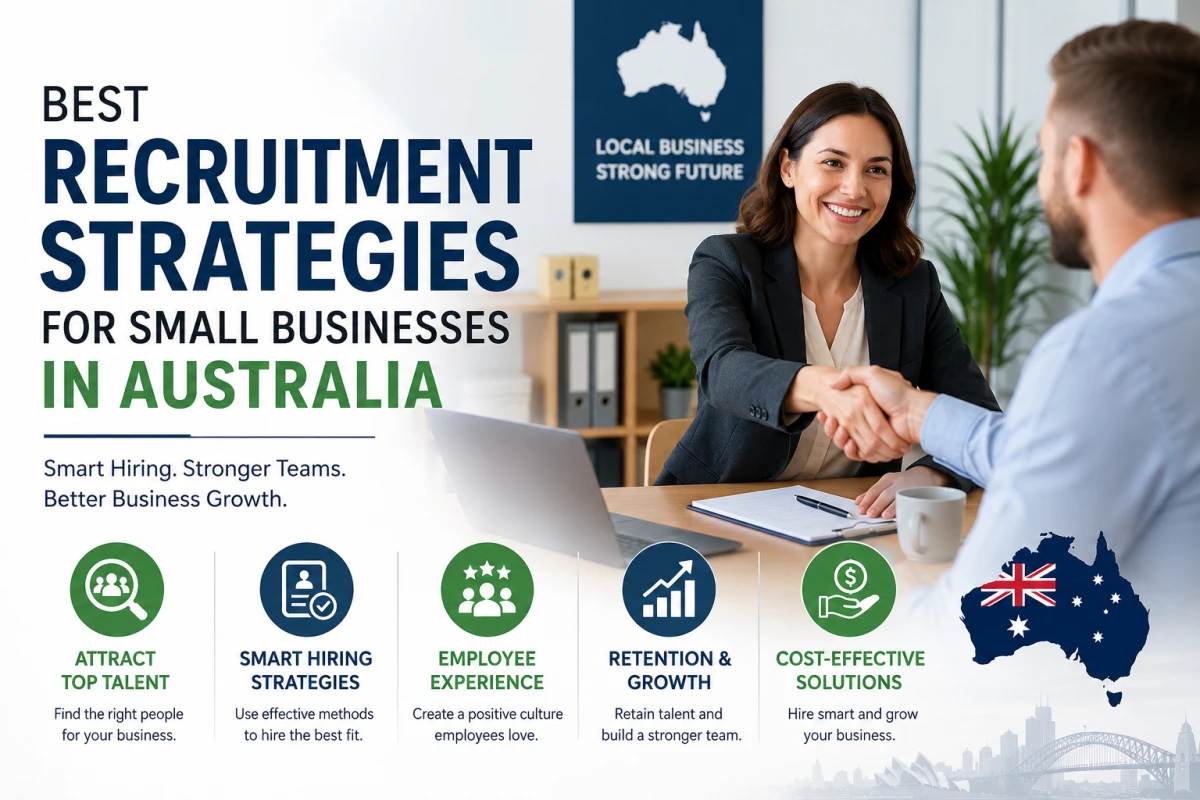

Successful recruitment isn't always about spending more — it's about using the right approach. Here's how small businesses can compete for quality talent in 2026 without overstretching their budgets.
Why it's hard
Challenges small businesses face
Australia's job market continues to evolve fast. Healthcare, hospitality, construction, IT, and logistics all face ongoing skills shortages — and employees now expect better pay, flexibility, and career growth.
Strategy 01
Build a strong employer brand
Candidates research company culture and employee experiences before applying. Small businesses can stand out by showcasing workplace culture on social media, sharing employee stories, and writing transparent job descriptions that highlight company values.
Strategy 02
Write better job descriptions
Vague or overloaded listings drive away good candidates. Focus on key responsibilities, essential skills, salary expectations, flexibility options, and growth opportunities. Replace "10 years of experience required" with a description of what the role actually needs.
Strategy 03
Diversify your hiring channels
Relying on a single job board limits reach. Use trusted job platforms, LinkedIn and Facebook for direct outreach, local community groups, and referrals from your network. The wider the net, the better the catch.
Strategy 04
Prioritise skills over degrees
Many Australian employers now value practical skills and problem-solving over formal qualifications. A skilled digital marketer may outperform a degree-holder with no hands-on experience. Skills-based hiring reduces talent shortages and widens your candidate pool.
Strategy 05
Speed up your process
Top candidates receive multiple offers. If your process drags on, you'll lose them. Cut unnecessary interview rounds, respond to applicants quickly, and make decisions faster. A smooth process also signals that your company is well-run.
Strategy 06
Offer flexible work arrangements
Flexible work is now a major priority for Australian workers. Even partial options — hybrid schedules, flexible hours, or a four-day week — help smaller businesses compete against larger employers who may offer higher salaries.
Strategy 07
Launch an employee referral programme
Your existing team is one of your best hiring tools. Referral programmes typically lead to faster hiring, better cultural fit, lower costs, and higher retention. Employees recommend people they genuinely believe will thrive.
Strategy 08
Invest in retention, not just recruitment
Replacing an employee is expensive and disruptive. Recognise achievements, offer career development, encourage open communication, and provide training. A team that feels valued stays longer — and recruits others.
Strategy 09
Partner with recruitment specialists
For hard-to-fill roles, working with a specialist saves time and improves quality. Recruitment partners provide access to pre-screened candidates, fill vacancies faster, and reach specialised talent pools that are difficult to find independently.
Hiring the right people can transform a small business. While recruitment challenges in Australia remain significant, smart hiring strategies can make a major difference.
By building a strong employer brand, improving job descriptions, embracing skills-based hiring, and focusing on retention, small businesses can attract top talent without overspending.
At SearchTalents, we help employers connect with quality candidates and simplify recruitment for growing businesses across Australia.
For information related to recruitment processes, workforce planning, and hiring employees.
Business.gov.au – Hiring Employees Guide
Used for labour shortages, skills gaps, and recruitment difficulties faced by Australian businesses.
Australian Bureau of Statistics (ABS) – Businesses Unable to Find Suitable Staff
Supports hiring strategies, retention ideas, and workforce planning for SMEs.
Small Business Development Corporation (WA) – Tackling Skills or Labour Shortages
Useful for employer branding, attracting candidates, and recruitment best practices.
Department of Employment and Workplace Relations (DEWR) – Recruitment Strategies
Helpful for small businesses looking to reduce hiring costs.
Business.gov.au – Wage Subsidies for Employers
Useful for understanding Australia’s talent shortages and workforce demand.
Jobs and Skills Australia – Skills Priority List
Supports legal hiring practices, workplace rules, and employer obligations.