
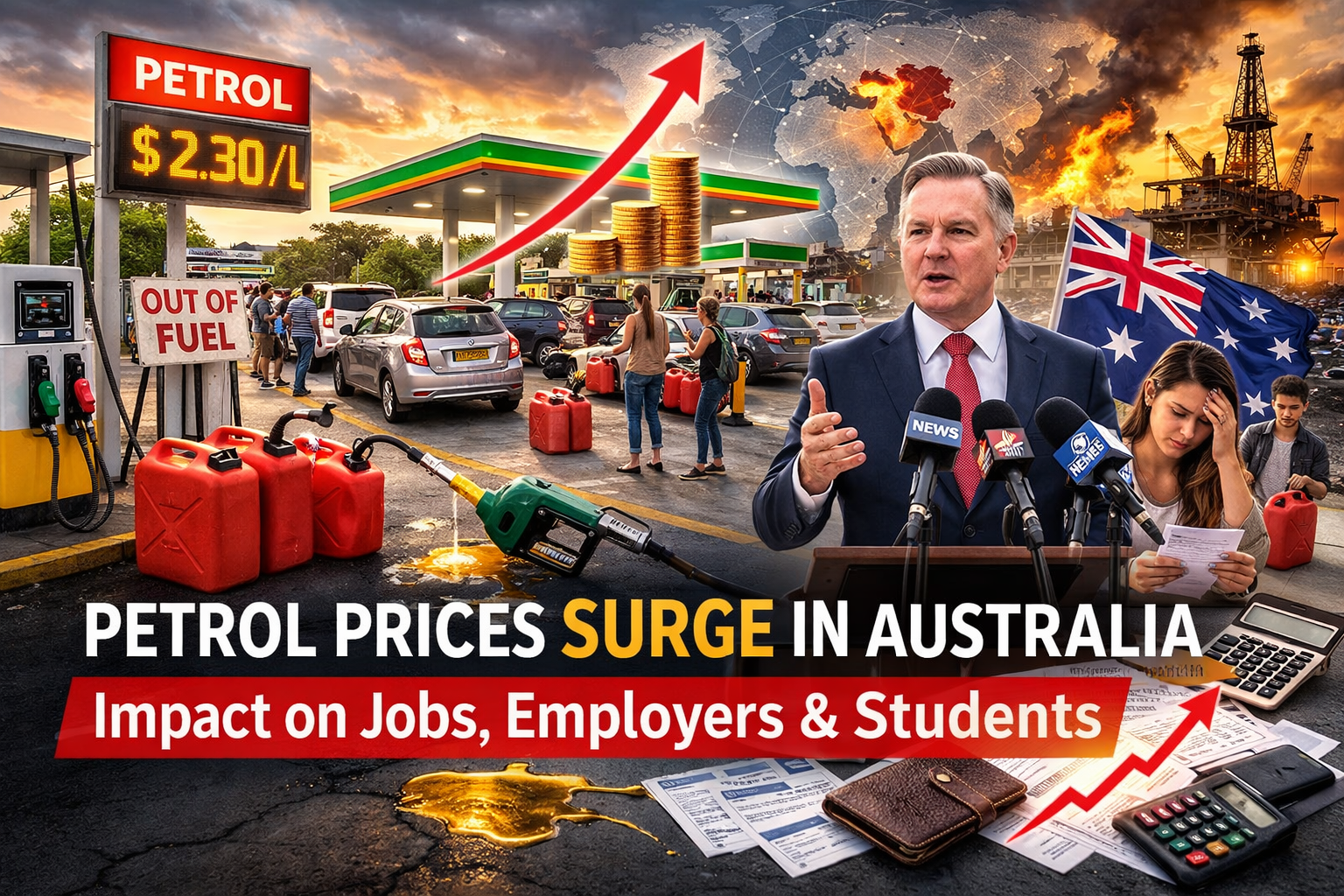

Recent news about rising fuel prices in Australia has raised concerns across industries. Energy Minister Chris Bowen recently urged Australians to stop panic buying petrol after reports of people purchasing large numbers of jerry cans. While the government confirmed that fuel supplies are still arriving as expected, global tensions in the Middle East and disruptions around the Strait of Hormuz have pushed oil prices up sharply.
Within just two weeks, global oil prices increased by nearly 40%, which has started to affect petrol prices across Australia. Many cities are already seeing petrol prices climb beyond $2.30 per litre, creating financial pressure not only for households but also for employers, workers and students.
For a platform like SearchTalents, which connects employers with skilled professionals and students, these developments highlight how global economic events can directly influence employment trends and workplace operations.
Businesses that rely heavily on transportation, logistics or commuting employees may experience immediate cost increases. Delivery services, construction companies, field technicians and agricultural businesses are particularly sensitive to fuel price fluctuations.
Higher fuel costs can lead to:
Increased operational expenses for businesses
Rising delivery or transportation costs
Adjustments in company travel policies
More remote or hybrid work options
Many employers may start encouraging flexible working arrangements to reduce commuting costs for employees.
Workers who commute long distances may feel the financial pressure first. Rising petrol costs increase daily travel expenses, especially for those living in regional areas.
Job seekers may start prioritising opportunities that offer:
Remote or hybrid work options
Jobs closer to home
Travel allowances or fuel reimbursements
Flexible work schedules
Platforms like SearchTalents help candidates discover roles that better match their location, skills and lifestyle needs during changing economic conditions.
Students and graduates entering the workforce should also pay attention to how economic changes affect industries. Rising fuel costs often influence sectors such as:
Logistics and transportation
Manufacturing
Agriculture
Retail supply chains
At the same time, it may increase demand for digital roles, remote services and technology-driven jobs that reduce physical travel.
Students using SearchTalents can benefit by exploring industries that are adapting quickly to these economic shifts.
Minister Chris Bowen warned that panic buying petrol — including people purchasing multiple jerry cans — can actually create artificial shortages. According to officials, fuel deliveries into Australia are still continuing as scheduled.
When people stockpile fuel unnecessarily, it increases short-term demand and puts additional pressure on supply chains, especially in regional areas.
For employers and workers, maintaining stability in supply chains is critical to keeping businesses operating normally.
While the government is closely monitoring the situation along with the Australian Competition and Consumer Commission, the long-term impact will largely depend on how global geopolitical tensions evolve.
For businesses, professionals and students, the key takeaway is clear: global economic events can quickly influence workplace trends, commuting patterns and hiring strategies.
Staying informed and adaptable is essential in a changing job market — and platforms like SearchTalents play a crucial role in helping employers find talent and helping job seekers discover the right opportunities.