
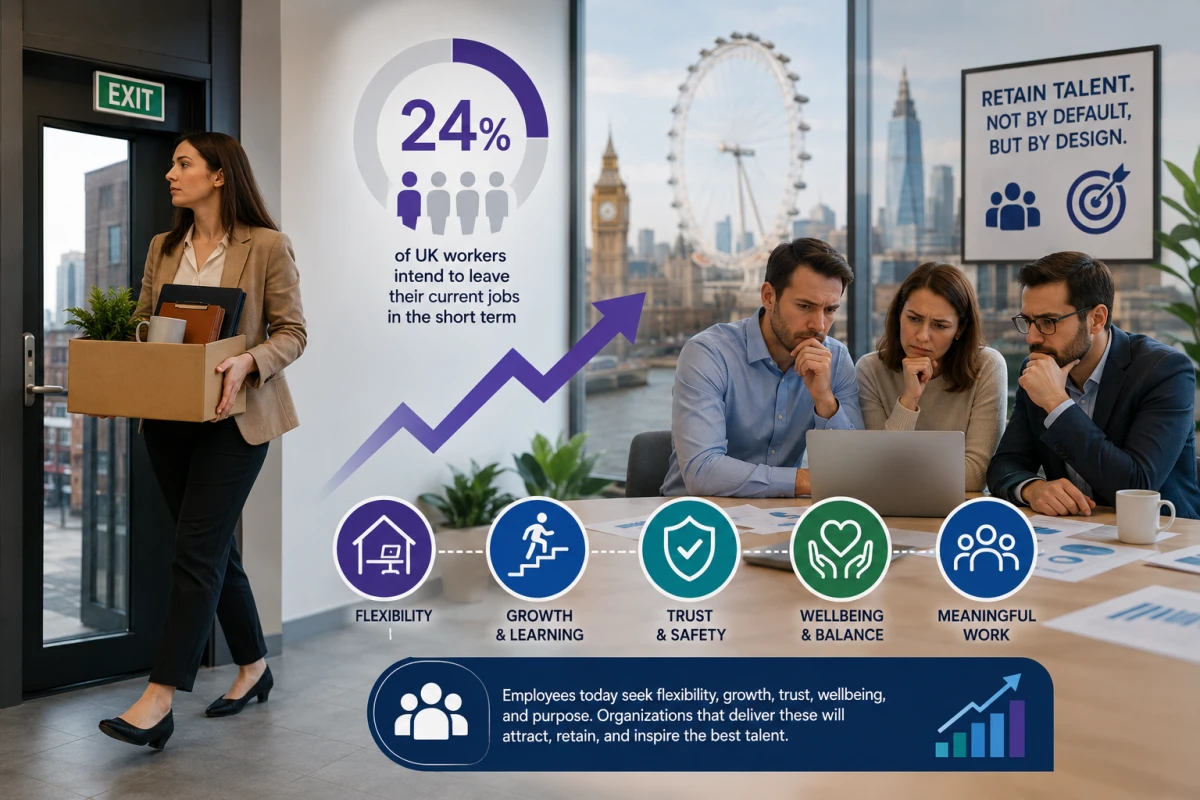

The UK workforce is entering 2026 amid notable flux. A recent Culture Amp analysis reports that nearly one in four UK workers (24 percent) intend to leave their current jobs within the short term — marking a rise in workplace fluidity and workforce mobility. This trend isn’t just a statistic; it signals deeper shifts in employee expectations, employer–employee dynamics, and the way organizations attract, retain, and develop talent.
For leaders in HR, talent acquisition, and organizational development — including those reading SearchTalents.co — this trend presents both a challenge and an opportunity to rethink traditional talent strategies.
Several factors are driving this heightened intent to leave:
1. Increasing Demand for Flexibility
Research from the Chartered Institute of Personnel and Development (CIPD) shows that a significant number of UK employees have left roles due to a lack of flexible working options, with over 1 million workers moving on for this reason alone. With hybrid and flexible work now mainstream, especially following the pandemic, expectations around where, when, and how work happens have permanently shifted.
Employees no longer view flexibility as a perk — it’s a standard job requirement. Companies that fail to deliver meaningful flexibility risk losing staff not just to competitors, but to entirely different career paths.https://londonlovesbusiness.com/
2. Employee Engagement and Experience Are At Risk
Long before 2026 began, global studies revealed that many workers were already disengaged or disillusioned with their roles. While exact UK engagement rates vary by study, broader global research pointed to declining levels of employee engagement, with one major report linking low engagement to a significant loss of productivity and higher turnover risk.https://uk.adp.com/
Employees today want psychological safety, authentic recognition, and work that aligns with their values. However, many organizations still struggle to foster genuine engagement and meaningful feedback loops.
3. Shifts in Workforce Priorities
Surveys across Europe indicate that employees are redefining success. Many now rank work–life balance, wellbeing, and stress reduction alongside — or even above — traditional career goals such as promotions or salary increases. This cultural shift is particularly pronounced among younger generations, such as Millennials and Gen Z, who are increasingly willing to change jobs to satisfy work–life fulfilment or growth expectations.
For HR leaders and talent strategists, the rising quit intent among UK workers should prompt a major re‑evaluation of current practices:
1. Retention Must Be a Strategic Priority (Not an Afterthought)
When nearly one in four employees is planning to quit, retention can no longer be treated as a tactical HR function. It needs to be embedded into organizational strategy. Leaders must understand why employees stay — and why they leave. The Culture Amp data suggests that the employee experience — including career progression, psychological safety, and meaningful feedback — plays a central role in retention outcomes.
2. Flexibility Is Now a Baseline Expectation
Hybrid work and flexible scheduling are no longer “nice to have” — they’re expected. Employers who insist on rigid on‑site mandates may see higher attrition, especially among younger employees and caregivers who prioritize autonomy. Flexibility supports not only retention but also wellbeing, engagement, and organizational loyalty.
3. Growth and Learning Drive Retention
A related workplace trend shows that employees are more likely to leave if they feel their development is stagnant. For example, research indicates that a large share of professionals across generations want better opportunities for learning and upskilling — without which they will seek new roles. Organizations need to shift from transactional HR models to ones that emphasize career growth, skill development, and personal advancement.
The UK quit trend presents unique opportunities for HR and talent acquisition professionals:
✔ Improve Candidate and Employee Experience
High quit intentions mean professionals are actively exploring the market. This provides a larger pool of career‑minded candidates — but only if organizations can stand out with authentic value propositions, better employer branding, and clear career pathways.
✔ Innovate Retention Practices
Employers can leverage data analytics (e.g., pulse surveys and engagement scores) to detect early warning signals of attrition. By acting on feedback, refining leadership training, and redesigning roles, companies can craft environments that retain talent rather than constantly replacing it.
✔ Align Work Culture With Employee Values
Modern workers increasingly seek meaning in their work. When organizational values align with employees’ personal values — such as sustainability, inclusion, or social impact — workers are more engaged and less likely to leave. Talent leaders must reflect these values authentically in culture, policy, and practice.
As we progress through 2026, the UK labour market is evolving rapidly. Although economic uncertainty may temper some hiring activity, organizations that prioritize employee‑centric strategies are most likely to thrive.
Rising quit intentions are not just a challenge; they’re a call to action for organizations to rethink traditional notions of employment, leadership, and work culture. For SearchTalents.co readers — particularly those in HR leadership, talent acquisition, and organizational development — the message is clear:
Retain talent not by default, but by design.
Design workplaces that value flexibility, growth, trust, and meaningful engagement, and employees will not just stay — they will contribute to innovation, resilience, and long‑term success.
To address the rising trend of UK workers planning to quit in 2026, organizations must prioritize employee experience, offering flexibility, growth opportunities, and supportive leadership. Fostering a strong culture aligned with values, providing clear career development pathways, and leveraging data-driven insights to anticipate attrition can significantly improve retention. Strengthening employer branding and creating an environment where employees feel valued, heard, and empowered will not only reduce turnover but also attract top talent, ensuring teams remain engaged, productive, and ready to drive long-term success.
#TalentManagement #EmployeeEngagement #TalentAcquisition #FutureOfWork #LeadershipDevelopment #ChangeManagement #SearchTalents#BritishBusiness #FTSE100 #HSBC #Barclays #LloydsBank #BP #ShellUK #UnileverUK #VodafoneUK #Tesco #MarksAndSpencer #BTGroup #UKLeadership #UKEconomy #UKWorkforce#SirKeirStarmer