
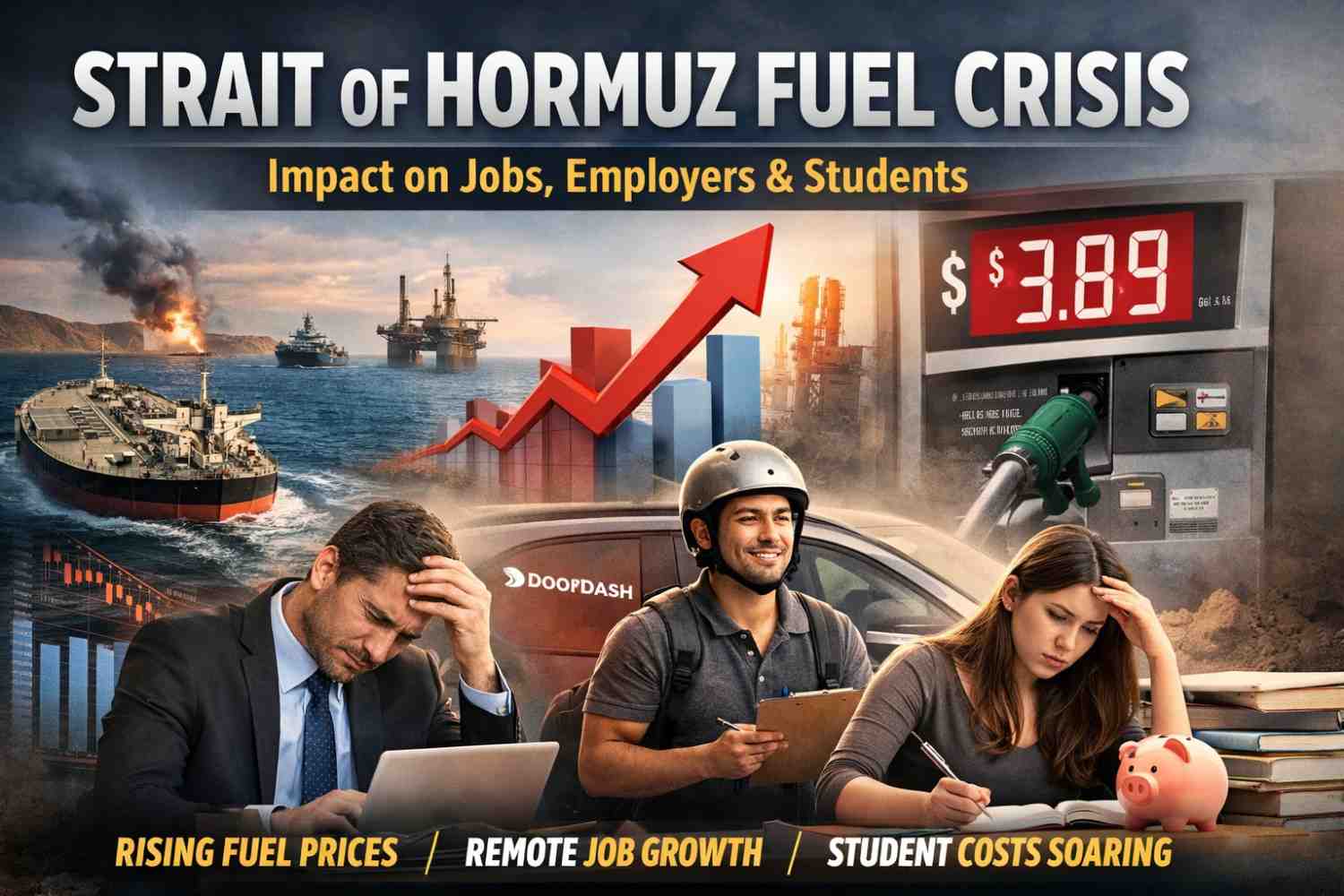

Strait of Hormuz Crisis Drives Fuel Prices Up: Why It Matters for Everyone

1774075916_strait-of-hormuz-crisis-drives-fuel-prices-up-why-it-matters-for-everyone.jpeg

Global tensions in the Strait of Hormuz have triggered a sharp rise in fuel prices, affecting economies worldwide. Recent comments from Donald Trump and responses from Australia highlight growing international pressure—but beyond politics, the real impact is being felt by businesses, job markets, and students.

As fuel costs surge, daily operations, hiring decisions, and living expenses are all being reshaped.

What This Means for Employers

Rising fuel prices are directly increasing the cost of doing business.

Key Impacts:
  • Higher transportation and delivery expenses
  • Increased operational and supply chain costs
  • Pressure to maintain profitability
Smart Employer Strategies:
  • Shift towards remote or hybrid work models
  • Reduce unnecessary travel and logistics expenses
  • Invest in digital tools to maintain efficiency

 Employers who adapt quickly will be better positioned to stay competitive during economic uncertainty.

What This Means for Jobseekers

Fuel crises often influence hiring trends and job availability.

Current Trends:
  • Growth in remote jobs and online roles
  • Slower hiring in transport and logistics sectors
  • Increased demand for multi-skilled and adaptable candidates
How to Stay Ahead:
  • Build skills in technology, communication, and remote work tools
  • Target industries less affected by fuel dependency
  • Showcase flexibility and problem-solving abilities

Jobseekers who align with changing market needs will have better employment opportunities.

What This Means for Students

Students are facing rising costs and changing career landscapes.

Key Challenges:
  • Higher commuting and daily living expenses
  • Increased cost of education-related needs
  • Uncertainty in future job markets
Smart Student Moves:
  • Focus on future-ready skills like digital literacy and analytics
  • Consider online learning and flexible study options
  • Plan careers in stable and growing industries

Students who prepare early can turn uncertainty into opportunity.

Why This Crisis Matters Globally

The Strait of Hormuz is one of the most critical oil supply routes in the world. Any disruption impacts:

  • Global fuel prices
  • Business costs
  • Job markets
  • Everyday living expenses

This situation highlights the importance of adaptability and resilience in today’s world.

Final Thoughts

The fuel crisis caused by tensions in the Strait of Hormuz is more than a global headline—it is a real-world challenge affecting employers, jobseekers, and students alike.

Those who adapt, upskill, and plan strategically will not only survive but thrive in this changing environment.

At SearchTalents, we bring you insights that help you stay ahead in your career and business journey.

News Sources 

#StraitOfHormuz #FuelCrisis #GlobalOilCrisis #BreakingNews #WorldNews #AustraliaNews #TrumpNews #EnergyCrisis #OilPrices #EconomicImpact #BusinessNews #JobMarket #Employers #Jobseekers #Students #CareerGrowth #RemoteJobs #WorkFromHome #HiringTrends #DigitalSkills #SearchTalents #CareerAdvice #FutureJobs #Upskilling #GlobalEconomy


Frequently Asked Questions

The fuel crisis raises transportation, logistics, and supply chain costs. Businesses that rely on delivery or travel face higher expenses, reducing profit margins.

Employers can adopt remote or hybrid work models, reduce travel, optimize supply chains, and invest in digital tools to maintain efficiency.

Yes, remote work reduces commuting and operational costs while maintaining productivity, making it an effective strategy during fuel price surges.

Students face increased commuting costs, higher daily expenses, and rising overall cost of living due to fuel price increases.

Stable career paths include technology, finance, healthcare, and online-based roles that are less impacted by fuel costs.

Students should focus on gaining digital skills, practical experience, and staying updated with industry trends to improve employability.