Artificial intelligence is no longer just a technology trend. It is now becoming a major part of national security, business strategy, cybersecurity and workforce planning.
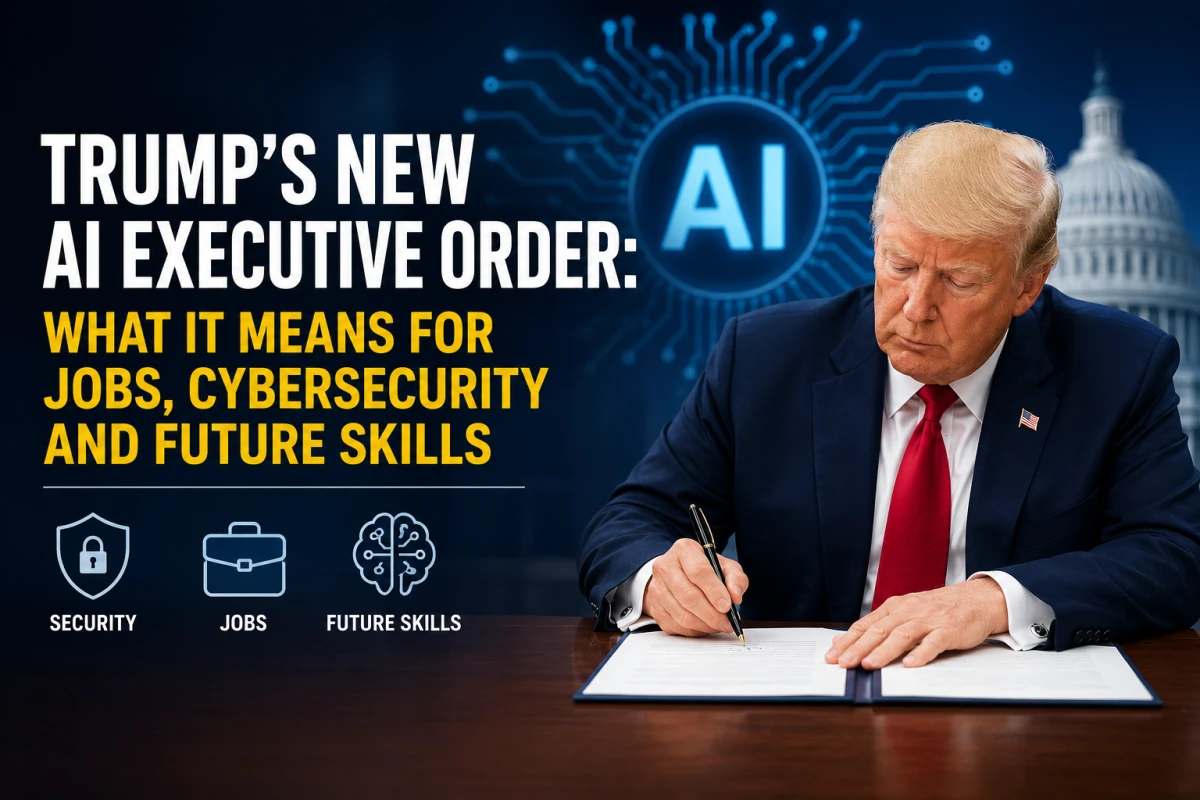
U.S. President Donald Trump has signed a new executive order that creates a voluntary framework for leading AI companies to share advanced AI models with the federal government before public release. The order allows the U.S. government to review certain frontier AI models for national security and cybersecurity risks for up to 30 days before they are widely launched.
This development shows how seriously governments are now taking AI safety. For students, job seekers, recruiters and employers, the message is clear: AI skills alone may not be enough in the future. The job market will also need people who understand AI safety, cybersecurity, compliance, data protection and responsible technology use.
The executive order is focused on advanced AI models, sometimes called frontier models. These are powerful AI systems that can support coding, research, cybersecurity testing, automation, data analysis and decision-making.
The order does not create a mandatory approval system for every AI model. Instead, it creates a voluntary process where leading AI developers can provide early access to the government for security review. According to AP News, participation by AI developers is voluntary, and the review window is expected to be up to 30 days.
The reason behind this move is simple: AI systems are becoming powerful enough to create both opportunities and risks. They can help businesses become more productive, but they can also be misused for cyberattacks, fraud, misinformation, software vulnerability discovery and attacks on critical infrastructure.
That is why AI is now becoming a matter of both innovation and security.
For many years, job seekers were told to learn digital skills, coding, data analysis and software tools. Today, the skills conversation is changing again.
The future job market will need professionals who can work with AI responsibly. This includes people who can test AI systems, protect data, secure digital platforms, follow compliance rules and help companies use AI safely.
The World Economic Forum’s Future of Jobs Report says AI and big data are among the fastest-growing skills, followed closely by networks, cybersecurity and technology literacy. The report also says technology-related roles such as AI and machine learning specialists, big data specialists and software developers are among the fastest-growing roles by percentage.
This means AI is not only changing tech companies. It is changing hiring across finance, healthcare, education, government, retail, logistics, manufacturing and professional services.
One of the biggest lessons from this executive order is the growing importance of cybersecurity.
As AI models become more advanced, companies will need more cybersecurity experts who understand AI-powered risks. These risks can include phishing attacks, automated hacking attempts, data leaks, deepfake fraud, model misuse and threats to business systems.
CompTIA’s State of the Tech Workforce report says tech occupations are expected to grow faster than the overall workforce, with strong growth expected for roles such as data scientists, cybersecurity analysts, software developers, IT directors and software QA testers. The report also notes that AI skills hiring reached nearly 275,000 active job postings in January 2026.
For job seekers, this means cybersecurity is no longer a narrow technical field. It is becoming a core business skill.
Even non-technical professionals can benefit from understanding basic cybersecurity, data privacy and responsible AI use. Employers increasingly need people who can work safely with digital tools, protect company information and understand the risks of using AI in daily operations.
Students should not look at this news only as a political update. It is a career signal.
AI is becoming part of almost every industry. Students who start learning AI tools, data basics, cybersecurity awareness and digital ethics will be better prepared for future job opportunities.
Important skills for students include:
Students do not need to become AI engineers immediately. But they should understand how AI is changing work, hiring and business decisions.
For job seekers, this news shows that employers may start looking for candidates who can combine technical ability with responsibility.
In the coming years, companies may prefer candidates who understand not just how to use AI, but how to use it safely and professionally.
For example, a marketing professional using AI should understand content accuracy and copyright risk. A finance professional should understand data privacy. A software developer should understand secure coding. A recruiter should understand fair and responsible AI use in hiring.
This is where job seekers can stand out.
Instead of writing only “AI tools knowledge” on a resume, candidates should show practical examples such as:
These examples can make a candidate look more job-ready.
Employers should also pay attention to this trend. AI adoption is growing fast, but many companies are still not training their teams properly.
Hiring the right talent will become more important as AI tools enter business operations. Companies will need people who can manage AI tools, protect sensitive information, follow compliance requirements and reduce digital risk.
This is not only a concern for large technology companies. Small and medium businesses also need AI-aware employees. A single mistake with customer data, passwords, financial records or AI-generated content can create serious business problems.
Employers should start looking for candidates with a mix of:
The best hiring strategy will not be only about finding people with degrees. It will be about finding people who can learn, adapt and work responsibly in an AI-powered workplace.
At SearchTalents.co, we believe the hiring market is moving toward skills-based and future-ready recruitment.
This AI executive order is another reminder that employers need smarter ways to find talent, and job seekers need better ways to show their skills. The future of hiring will not depend only on resumes. It will depend on practical skills, verified experience, adaptability and digital readiness.
SearchTalents.co helps connect employers with skilled candidates who are ready for modern workplace needs. As AI continues to change the job market, platforms like SearchTalents can support employers, recruiters and job seekers by making talent discovery faster, smarter and more relevant.
As governments and companies focus more on AI safety, several career areas may become more valuable:
These roles show that AI is not only creating jobs for coders. It is also creating opportunities for people in law, compliance, HR, business, education, governance and operations.
Trump’s AI executive order is a major signal for the global job market. It shows that AI is moving from simple workplace automation to a serious area of security, governance and policy.
For students, this is the right time to start learning AI and cybersecurity basics. For job seekers, this is the right time to upgrade skills and show practical digital ability. For employers, this is the right time to hire people who can work with AI responsibly.
AI will continue to change how companies operate, how governments regulate technology and how people build careers. Those who understand this shift early will be better prepared for the future of work.