
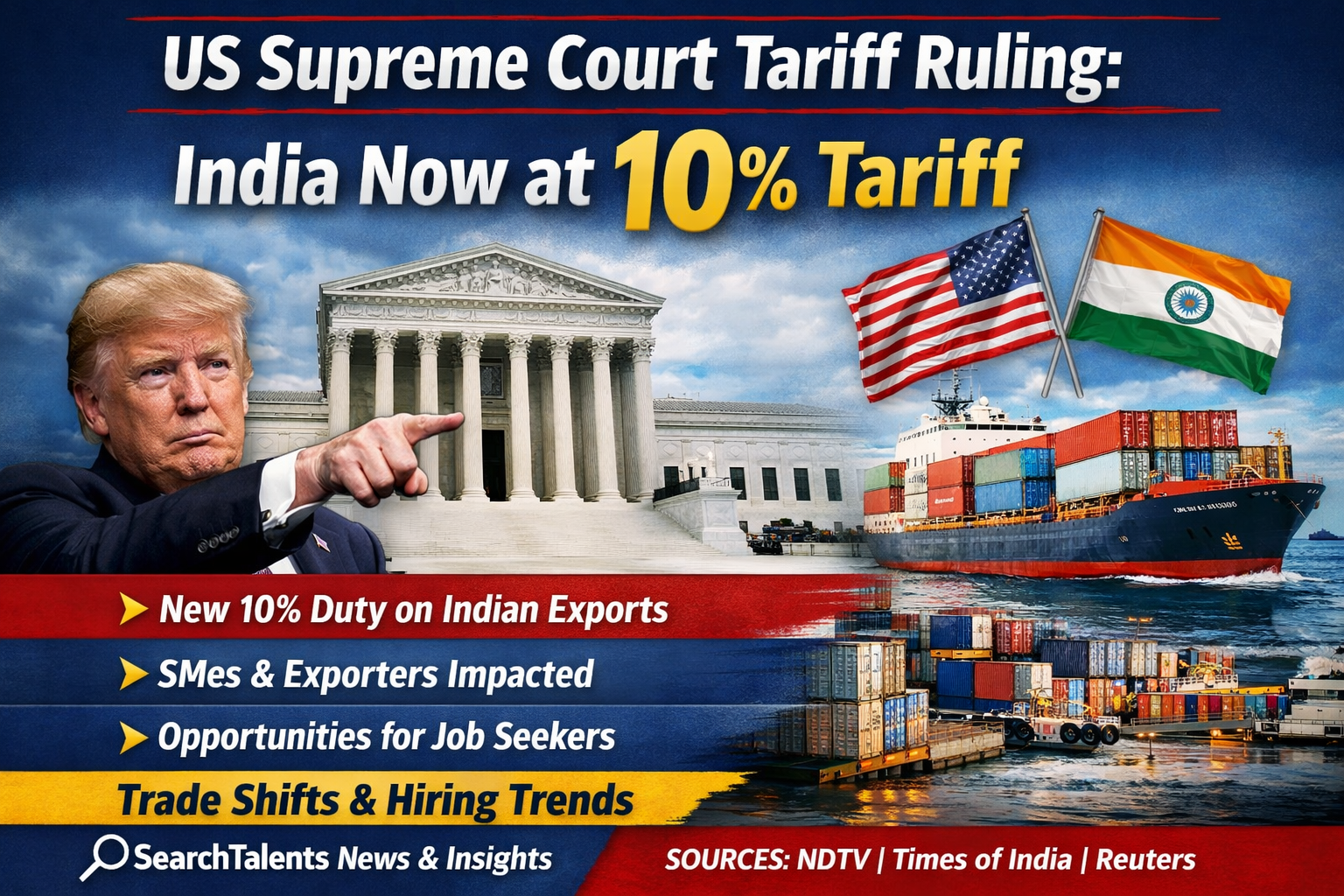

The United States has imposed a uniform 10 percent tariff on imports after the US Supreme Court struck down former President Donald Trump’s broader tariff powers under the 1977 emergency law. The ruling effectively blocks the President from using the International Emergency Economic Powers Act to impose sweeping country specific duties.
As a result, countries including India will now face a flat 10 percent duty instead of the previously negotiated 18 percent tariff under the interim India US trade framework. The new rate takes effect from February 24 and will remain in force for 150 days. Certain sectors such as pharmaceuticals and goods under the US Mexico Canada trade agreement remain exempt.
Trump has said the India deal is still on and that trade relations remain strong. However, this shift creates uncertainty for exporters and businesses that had structured pricing around earlier tariff agreements.
For Indian SMEs and exporters:
Industries such as textiles, auto components, IT hardware, and manufacturing stand to benefit from reduced duty pressure.
If you are hiring for export operations, logistics, international sales, compliance, or supply chain management, this is the right time to scale teams strategically.
SearchTalents can support employers by connecting them with:
Students in fields like:
should pay attention.
Trade volatility increases demand for professionals who understand global compliance, tariff structures, and cross border regulations. This creates career opportunities in:
Job seekers who upskill in trade analytics and global market research will have an advantage.
Economic shifts create hiring shifts. Companies that adapt early win.
🔗 Trump Tariffs Live Updates: India Tariffs Cut To 10% From Feb 24 For 150 Days – NDTV
https://www.ndtv.com/world-news/trump-tariff-live-updates-today-us-supreme-court-rules-against-us-presidents-global-tariffs-11113946
🔗 Trump Tariffs Live: Trump's 10% Global Tariffs to Come Into Effect from February 24 – India Today
https://www.indiatoday.in/world/us-news/story/us-supreme-court-strike-down-donald-trump-tariff-emergency-law-us-president-media-briefing-live-updates-2871857-2026-02-20
🔗 Why US Supreme Court Struck Down Donald Trump’s Trade Tariffs – Times of India
https://timesofindia.indiatimes.com/business/international-business/why-us-supreme-court-struck-down-donald-trumps-trade-tariffs-explained-in-10-points/articleshow/128630959.cms
🔗 ‘Nothing changes; they will be paying tariffs’: What Trump said on trade with India – The Indian Express
https://indianexpress.com/article/world/us-news/donald-trump-india-us-trade-deal-supreme-court-tariff-ruling-explained-10543463/
🔗 Trump Tariffs Struck Down by US Supreme Court; New 10% Global Tariff Imposed – Moneycontrol
https://www.moneycontrol.com/world/trump-tariffs-struck-down-by-us-supreme-court-how-india-could-benefit-and-what-challenges-remain-explained-article-13837905.html
🔗 US Supreme Court Strikes Down Trump’s Global Tariffs – Reuters
https://www.reuters.com/legal/government/us-supreme-court-rejects-trumps-global-tariffs-2026-02-20/
🔗 Trump Tariff Ruling and Global Market Uncertainty – The Guardian
https://www.theguardian.com/us-news/2026/feb/20/trump-tariff-scotus-trade-business-uncertainty