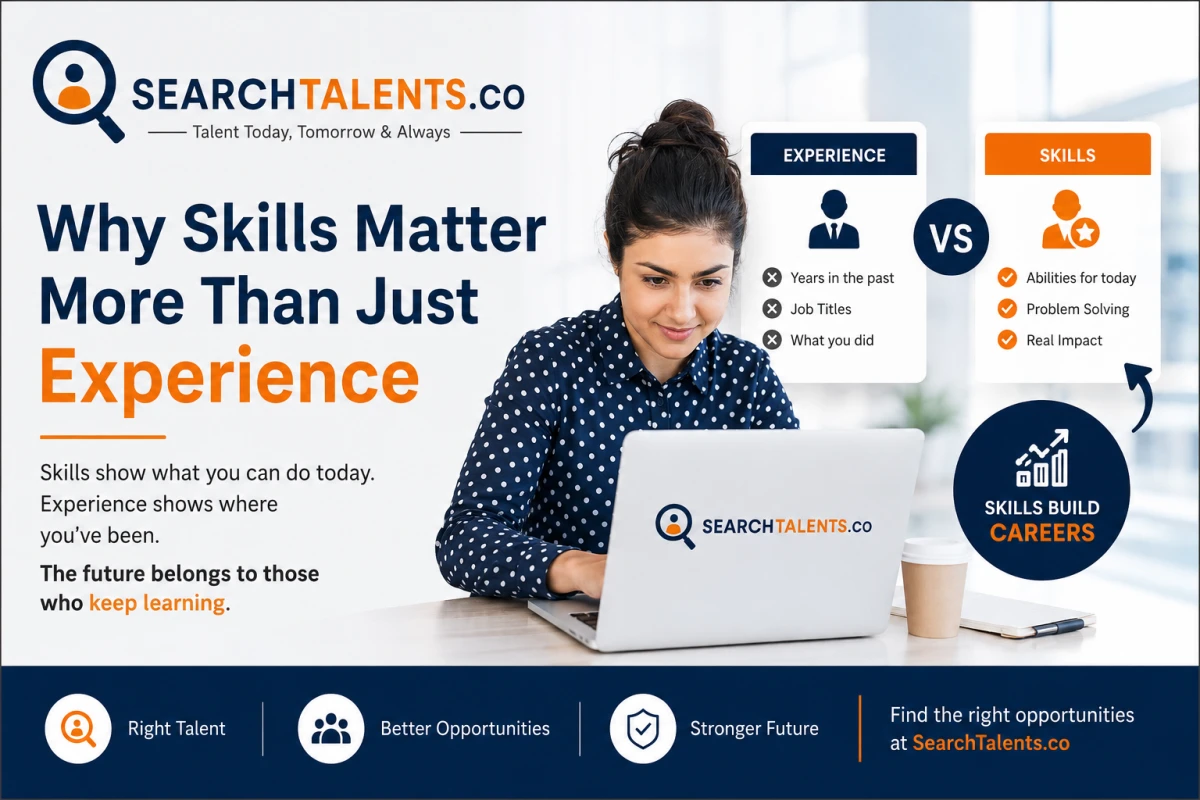

For many years, experience was one of the biggest factors in hiring. Employers often looked at how many years a candidate had worked before deciding whether they were suitable for a role. But the hiring market is changing. Today, companies are not only asking, “How long have you worked?” They are asking, “What can you actually do?”
This is why skills are becoming more important than just experience.
A candidate may have years of experience, but if their skills are outdated, they may struggle to perform in a modern workplace. On the other hand, a candidate with less experience but strong practical skills, learning ability, and problem-solving mindset can often deliver better results.
According to the World Economic Forum, employers expect major changes in workplace skills between 2025 and 2030, with technology, AI, and business transformation reshaping the way people work. LinkedIn also highlights that skills-first hiring can help employers access broader talent pools by focusing on what people can do, rather than only their formal background.
Earlier, experience was seen as proof of ability. If someone had worked in a role for five or ten years, employers assumed they were capable. But this is not always true anymore.
Many industries are changing quickly. New software, automation, AI tools, digital platforms, and customer expectations are changing job responsibilities. This means old experience alone may not be enough.
Employers now want candidates who can:
This is where skills-based hiring becomes important. Instead of judging candidates only by job titles or years of experience, recruiters look at practical ability, job readiness, and real performance potential.
Recent reporting from Reuters also shows that AI is changing hiring needs, especially in technology and business roles, where companies are prioritising practical AI skills, cybersecurity knowledge, domain expertise, and adaptability.
Experience is still valuable, but it does not always prove that a candidate is the best fit. Someone may have worked in the same type of role for many years but may not have updated their skills.
For example, a marketing professional with ten years of experience may still struggle if they do not understand SEO, analytics, automation tools, or digital campaigns. A finance candidate may have experience but still need strong Excel, reporting, compliance, and data interpretation skills. A recruiter may have worked for years but still need modern sourcing, ATS, communication, and candidate screening skills.
This is why employers are becoming more careful. They want evidence of capability, not just a long resume.
Skills are powerful because they show current ability. They tell employers what a candidate can contribute today.
A candidate with strong skills can usually:
This is especially important for fast-moving industries where employers do not have time to train every candidate from the beginning. Companies want people who are ready to contribute.
That does not mean freshers or less-experienced candidates cannot compete. In fact, skills can help them stand out. If a fresher has practical projects, certifications, internships, communication skills, and knowledge of industry tools, they can become more attractive to employers.
When people talk about skills, they often think only about technical skills. But soft skills are just as important.
Employers want candidates who can communicate, manage time, solve problems, handle pressure, and work professionally. A candidate may be technically strong, but if they cannot communicate properly or work with a team, they may not succeed in the role.
Important soft skills include:
The World Economic Forum has also identified skills such as analytical thinking, resilience, leadership, and technological literacy as important for future workplaces.
For jobseekers, the message is clear: do not depend only on your past experience. Build and show your skills.
Your resume should not only say what jobs you have done. It should show what results you created, what tools you used, and what problems you solved.
Instead of writing:
“I worked as a sales executive for three years.”
Write something stronger:
“Managed customer follow-ups, improved lead conversion, handled CRM records, and supported monthly sales targets.”
This gives recruiters a clearer idea of your actual ability.
Jobseekers should focus on:
On platforms like SearchTalents.co, jobseekers can explore opportunities and understand what employers are looking for in different roles. This helps candidates prepare better and apply more strategically.
For employers, hiring only by experience can limit good talent. Some candidates may not have a long work history but may have the exact skills needed for the role.
Skills-first hiring can help recruiters identify stronger candidates by focusing on:
This approach can also reduce hiring mistakes. Instead of selecting candidates only because they have worked for many years, recruiters can select people who are genuinely capable of doing the job.
LinkedIn’s skills-first research suggests that focusing on skills can help businesses access larger and more diverse talent pools.
Saying “I have skills” is not enough. Candidates must prove their skills through examples.
Here are some simple ways:
For example, if you are applying for a digital marketing role, do not only write “social media marketing.” Mention campaign planning, content scheduling, SEO, analytics, lead generation, or ad management if you know them.
If you are applying for an admin role, mention data entry accuracy, scheduling, documentation, MS Office, reporting, and coordination skills.
The more specific your skills are, the easier it becomes for recruiters to understand your value.
This does not mean experience is useless. Experience is still important. It shows workplace exposure, responsibility, and industry understanding.
But experience becomes more powerful when it is supported by skills.
The best candidates usually have both:
A person with experience but no updated skills may fall behind. A person with skills but no experience can still grow quickly. But a person with both practical skills and relevant experience becomes highly valuable.
The modern job market is changing fast. Employers want people who can adapt, learn, and perform. That is why skills matter more than just experience.
For jobseekers, this is a big opportunity. You do not have to wait for many years of experience to become valuable. You can start building job-ready skills today.
For employers and recruiters, skills-based hiring can help find better candidates, reduce hiring delays, and build stronger teams.
SearchTalents.co connects jobseekers and employers in a more practical way, helping candidates find better opportunities and helping recruiters discover talent that is ready for today’s workplace.
#SearchTalents #SkillsBasedHiring #JobSearchTips #CareerGrowth #Recruitment #JobReadySkills #HiringTrends #Employers #Jobseekers #TalentSearch