10 min read • Freshers & Experienced • All Industries • April 2026
7 seconds to form first impression | 33% hiring decisions made in 90 seconds | 47% candidates rejected for poor preparation |
Most people prepare for interviews by rehearsing answers. But interviews are won on something deeper — your ability to show understanding, relevance, and confidence simultaneously. Here’s what actually moves the needle.
Don’t just visit the company website. Read their last 3 press releases, check the LinkedIn posts of your potential manager, and look at Glassdoor reviews from the past 6 months. When you mention a real company detail in the interview, the conversation shifts — you become a peer, not a candidate.
What to research:
• Products or services they offer and what makes them unique
• Their mission, vision, and recent achievements
• Key competitors and how the company positions itself
• Recent news, funding rounds, or product launches
• LinkedIn profiles of interviewers (if names are known)
Every JD has hidden priorities. What’s listed first is most important. What’s repeated twice is non-negotiable. Build a 3-column map: what they want → what you’ve done → how you’ll say it. This single prep step can double your confidence going in.
“Tell me about yourself” is not small talk — it’s a pitch. Structure it as:
• Background (10 sec) — Who you are and your education/background
• Most relevant achievement (25 sec) — Your strongest proof point for this role
• Why this role, right now (25 sec) — Your genuine motivation and fit
Practice it until it feels natural, not memorised.
The classic STAR method works. But top candidates add a fifth step — Reflection. After sharing the Result, briefly say what you’d do differently or what you learned. It shows maturity and self-awareness that interviewers remember.
S — Situation | Set the context briefly |
T — Task | Your specific role and responsibility |
A — Action | What you actually did (focus here!) |
R — Result | Measurable outcome with numbers if possible |
+ Reflection | What you learned or would do differently (bonus step) |
A startup and a bank have different definitions of ‘professional.’ Research the company culture — even one photo from a team event on LinkedIn tells you a lot. When in doubt, go one level above what you think is right. It shows you care before you’ve said a word.
Most people think they’re clear when they ramble. Watch yourself on video once and you’ll identify 3 habits to fix immediately — filler words, lack of eye contact, or rushed pacing. It’s uncomfortable. It’s also the single most effective preparation habit you can build.
Don’t ask “What are the perks?” Instead, ask: “What’s the biggest challenge this team is working through right now?” or “What would make someone exceptional in this role 6 months from now?” These questions signal ambition, not just interest.
Most thank-you emails say “Thanks for your time.” Stand out by referencing something specific from the conversation — a challenge they mentioned, a project they’re excited about. It shows you were genuinely listening. Send it within 4 hours, not 24.
The candidates who get offers stop trying to impress and start genuinely evaluating fit — on both sides. This mental shift removes the desperation vibe and projects quiet confidence. It is the single biggest game-changer you can make today.
# | Question | Strategy |
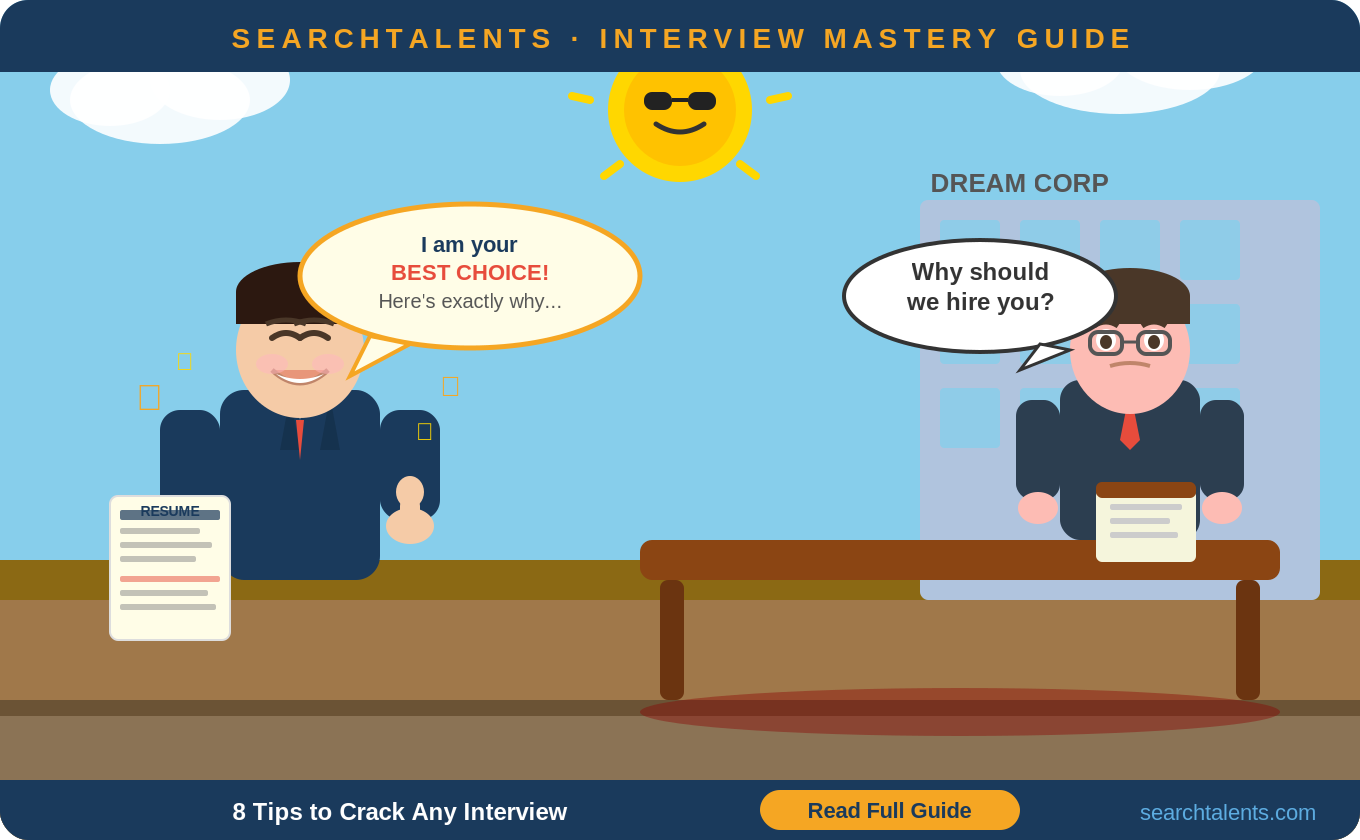
01 | Why should we hire you? | Lead with your top 1–2 differentiators, not a list of generic skills |
02 | What’s your biggest weakness? | Give a real one, then show how you’re actively working on it |
03 | Where do you see yourself in 5 years? | Align your growth with the company’s direction |
04 | Tell me about a failure. | Show what you learned, not just that you recovered |
05 | Why do you want to leave your current job? | Stay positive. Talk about growth, not frustration |
06 | How do you handle pressure? | Give a specific example with a measurable outcome |
07 | What’s your expected salary? | Research market rate. Give a range, not a single number |
Go through this the night before your interview:
✓ Company research done (mission, recent news, competitors)
✓ JD decoded, key skills mapped to your experience
✓ Self-intro practised out loud (not just in your head)
✓ 3 STAR stories prepared with measurable results
✓ 2–3 smart questions ready for the interviewer
✓ Outfit ready, route or video link tested the day before
✓ Thank-you email draft ready to personalise after the interview
Your dream job is one well-prepared interview away. Cracking a job interview is all about preparation, confidence, and clear communication. By following these eight moves, you’ll feel more in control and ready to succeed.
Remember: every interview is a learning experience. Keep improving, and the right opportunity will be within reach.
#InterviewTips #JobSearch2025 #CareerGrowth #HiringNow #SearchTalents #InterviewPrep #JobSeekers #WorkSmarter