In today’s fast-paced digital world, staying productive while maintaining your mental and physical well-being has become more challenging than ever. Whether you are a student preparing for your future, a job seeker trying to secure the right opportunity, or an employer managing multiple responsibilities, the pressure to perform is constant.
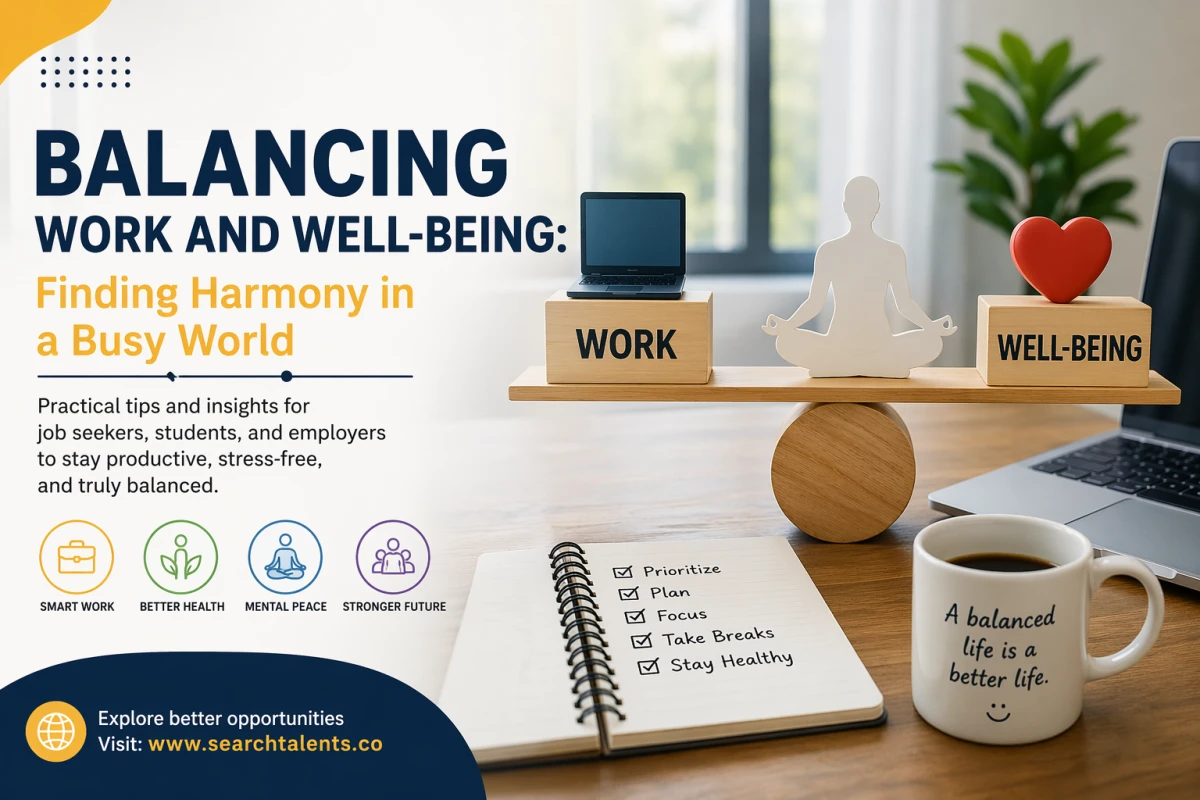
Work-life balance is no longer just a trend — it has become a necessity. In 2026, success is not defined by how busy you are, but by how effectively you manage your time, energy, and overall well-being.
Why Work-Life Balance Matters in 2026
Rising stress and burnout levels across industries:Continuous workload, tight deadlines, and the expectation to stay constantly connected have increased stress levels significantly, leading to burnout and reduced efficiency over time.
Increased competition for students and job seekers:With more candidates entering the job market, individuals often push themselves too hard to stay ahead, which can negatively impact both their health and performance.
Employers struggling with productivity and retention:Organizations are facing challenges in maintaining employee satisfaction, as overworked teams tend to lose motivation and eventually leave for better work environments.
Mental health becoming a major workplace priority:Companies are now realizing that employee well-being directly affects performance, making mental health support and balanced work culture more important than ever.
Common Challenges People Face
For Job Seekers
Applying to multiple jobs without a clear strategy:Many candidates focus on quantity over quality, which wastes time and reduces their chances of getting selected for the right roles.
Pressure to gain experience quickly and prove skills:The urgency to build a strong profile often leads to stress, confusion, and sometimes poor career decisions.
Dealing with rejections and lack of responses:Constant rejection can lower confidence and make the job search process emotionally exhausting.
For Students
Balancing studies, internships, and skill development Managing academics along with practical learning can become overwhelming without proper planning.
Uncertainty about career direction Many students struggle to choose the right path, which creates confusion and unnecessary pressure.
Academic workload and deadlines Continuous assignments and exams can impact mental health and reduce overall productivity.
For Employers
Managing multiple responsibilities and teams Handling operations, hiring, and team performance simultaneously can lead to stress at the leadership level.
Employee burnout and disengagement Overworked employees tend to lose interest and motivation, affecting team performance.
Maintaining productivity while ensuring well-being Finding the balance between performance targets and employee satisfaction is a key challenge.
Practical Tips to Balance Work and Well-Being
1. Set Clear Priorities
Focus on tasks that truly matter instead of trying to handle everything at once.
Break larger goals into smaller, manageable steps to reduce pressure and improve clarity.
2. Create a Structured Routine
Plan your day with fixed time slots for work, rest, and personal activities.
A consistent routine helps improve discipline and reduces unnecessary stress.
3. Take Regular Breaks
Short breaks between tasks help refresh your mind and maintain focus.
Even small pauses can significantly improve productivity and reduce fatigue.
4. Focus on Skill-Based Growth
Invest your time in learning skills that are directly relevant to your career goals.
This approach saves time and increases your chances of finding better opportunities.
Avoid overcommitting to tasks that do not align with your priorities.
Setting boundaries helps maintain both productivity and mental peace.
6. Maintain Mental and Physical Health
Regular exercise, proper sleep, and a balanced routine are essential for long-term success.
A healthy mind and body improve focus, energy levels, and decision-making ability.
7. Use Smart Tools for Efficiency
Use platforms like SearchTalents to simplify job searching and hiring.
Smart tools help you focus on relevant opportunities instead of wasting time.
How Employers Can Support Work-Life Balance
Provide flexible working options to employees Flexibility allows employees to manage personal responsibilities while maintaining productivity.
Encourage breaks and time off regularly Giving employees time to recharge improves long-term performance and satisfaction.
Build a supportive and positive work culture A healthy environment increases engagement, motivation, and team collaboration.
Focus on outcomes rather than working hours Measuring success based on results creates a more efficient and stress-free workplace.
The Role of Smart Job Platforms
Modern job platforms are transforming how people find jobs and manage hiring processes.
With SearchTalents, you can:
Create one profile and apply to multiple jobs easily
Find roles that match your skills and experience
Reduce time spent searching for opportunities
Help employers hire faster and more efficiently
This creates a smoother, less stressful experience for both job seekers and employers.
Conclusion
Balancing work and well-being is not about perfection — it’s about making smarter choices every day. In a busy world, the ability to manage your time, energy, and mental health effectively is what truly defines success.
Whether you are starting your career or managing a team, maintaining balance will help you grow faster, stay healthier, and achieve long-term goals without burnout.
Work-life balance means managing your professional and personal life in a way that reduces stress while maintaining productivity. It is important because it helps improve mental health, focus, and long-term career success.
By setting clear priorities, following a structured routine, and taking regular breaks, individuals can manage their time better and reduce unnecessary pressure.
Yes, when your mind and body are well-rested, you can focus better, make smarter decisions, and complete tasks more efficiently.
Job seekers should focus on applying to relevant roles instead of applying randomly. Using smart platforms like SearchTalents can also help reduce effort and improve results.
Students should create a daily schedule that includes time for study, skill development, and rest. Consistency helps maintain both performance and well-being.
The biggest mistake is not having a clear direction and trying to do everything at once instead of focusing on specific goals and skills.
Employers can offer flexible working options, encourage breaks, and create a positive work environment that supports both performance and mental health.
Yes, employees are more likely to stay with organizations that value their well-being and provide a balanced work culture.
By focusing on results instead of working hours and using efficient tools like SearchTalents, companies can improve performance while maintaining employee satisfaction.